
Framing the “Century Question”: How does a diamond’s legacy survive the hand that currently holds it?
Authored by visual artist Reena Ahluwalia, this essay originally appeared in the March–April 2026 print edition of Diamond World, followed by the June 2026 digital editions of Diamond World and Indian Jeweller.

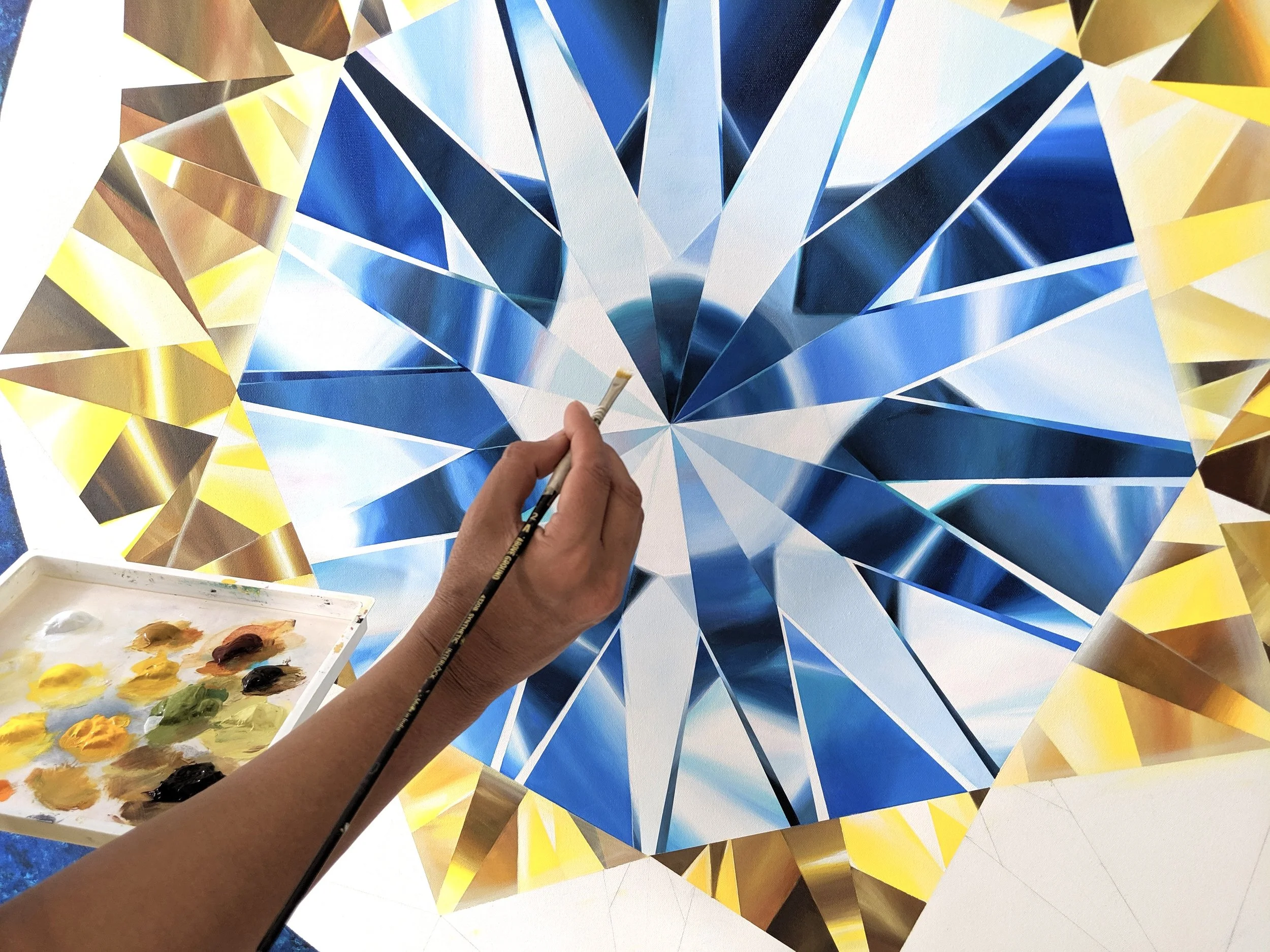
Visual Artist Reena Ahluwalia, The Third Eye (2020). A monumental fine art painting on canvas. An inquiry into light as a medium of endurance. Here, the gemstone is transformed into a philosophical prism, capturing the internal frequency of resilience. Image: Reena Ahluwalia.
In Billion Diamond Dreams, the opening of this two-part inquiry, I focused on crafting a jewelry narrative through cultural authorship. These aspirations lead to a fundamental question in Part II: Billion-Year Paradox.
Can we truly own what was formed billions of years before us and will endure long after we are gone? Perhaps our role is not to possess, but to serve as responsible stewards.
At the center of this inquiry is the Century Question: how does a diamond’s legacy survive the hand that currently holds it? While we honor the tradition of passing these stones from one generation to the next, we must imagine whether diamond, as a medium of expression, can withstand the next 100 years of cultural shifting.
The paradox lies in this collision — between our fleeting lifespan and the diamond’s three-billion-year journey. In the 24-hour day of a single diamond, a 90-year human life lasts just 0.0026 seconds: forty times faster than a blink. This forces us to reconcile a temporary existence with an object that is effectively eternal. We are challenged to ask, would the meaning we attach to it today become obsolete tomorrow?
If diamonds outlast us all, "claiming" them is an impossibility.
The Constant and the Variable
Think of the paradox of Ozymandias. A king who built a massive stone statue to command the future. Only to end up as broken rubble in a silent desert. The tragedy wasn't that the statue broke; it’s that the story died while the stone remained.
The diamond is Ozymandias without the ruins.
It is the only true “forever” present. Yet we often treat its meaning as something human-scaled and comfortably romanticized. We forget the sheer weight of the medium we handle.
The diamond is the constant. The human is the variable.
Our role is to ensure the meaning we weave into these stones is as resilient as the atoms themselves. We don’t want the story of today to become the forgotten king of tomorrow.
Eternal Medium, but a Narrow Vision
The same-old marketing playbooks are failing us, blindly following them while expecting new results is a dead end. It is time to think deeper. When we shut out worldviews of philosophers, cultural anthropologists, and artists, our vision narrows. We end up trapping an eternal medium in a short-term transactional cycle.
The 18th-century geologist James Hutton saw “no vestige of a beginning, no prospect of an end” in the Earth's cycles. We see the success of this perspective in the Chauvet Cave paintings. Thirty thousand years ago, artists did more than decorate a wall; they anchored a human story on a geological constant. Because they chose a resilient medium and a universal message, their imprint still speaks today.
Ownership is passive. Stewardship is active.
Who, then, is the architect of this narrative?
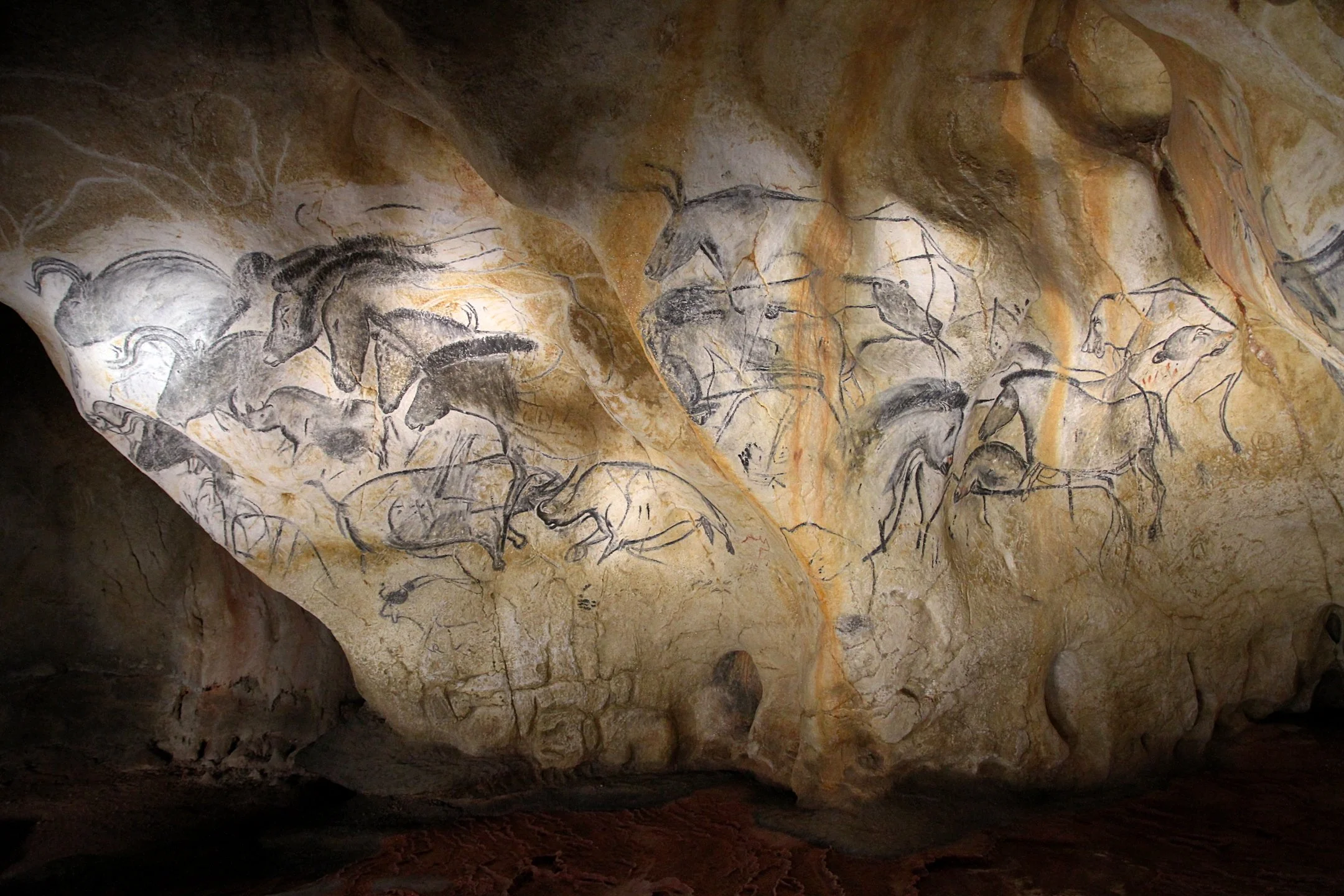
The Horses Fresco, Hillaire Chamber. Chauvet Cave (c. 30,000 BCE). Thirty thousand years ago, artists anchored a human story to this geological constant. Photograph by Claude Valette via Wikimedia Commons (CC BY-SA 4.0).
An Anchor in a Liquid World
Each new generation is becoming indifferent to the traditional billion-year sales pitch. In the world of deepfakes, "forever" feels like a marketing ghost. Identity and culture are in flux, a dissolving reality.
This is where the Century Question becomes essential. In an age of transience, there is a hunger for the indisputable. The stone is a tangible truth in a world of simulation. It is the ultimate anchor for a generation seeking a foothold in the authentic. By shifting from passive owner to active steward, the fleeting human story is tethered to the immutable.

Antonio de Pereda, Allegory of Vanity (c. 1632). Oil on Canvas. A study in the "Vanitas" tradition, where the jewels and riches serves as a reminder of fleeting status against the permanence of death. Courtesy of the Kunsthistorisches Museum, Vienna, via Google Art Project and Wikipedia Commons.
The Vanitas Prism

Antonio de Pereda, Allegory of Vanity (c. 1632). Oil on Canvas. A study in the "Vanitas" tradition, where the jewels and riches serves as a reminder of fleeting status against the permanence of death. Courtesy of the Kunsthistorisches Museum, Vienna, via Google Art Project and Wikipedia Commons.
To further understand the Billion-Year Paradox, let’s look to the 17th-century Vanitas movement — a tradition of memento mori, reminding us of our mortality.
Dutch artists painted beautiful jewels next to skulls and wilting flowers. They weren't highlighting wealth but showing that life is brief. The message was simple: the diamond lasts, but the person wearing it does not. This reveals a vital truth: an object that sells only sparkle competes with cheap mirrors. An object that embodies permanence has no competition at all.
This speaks to how I apply philosophical prism to my practice as a visual artist.
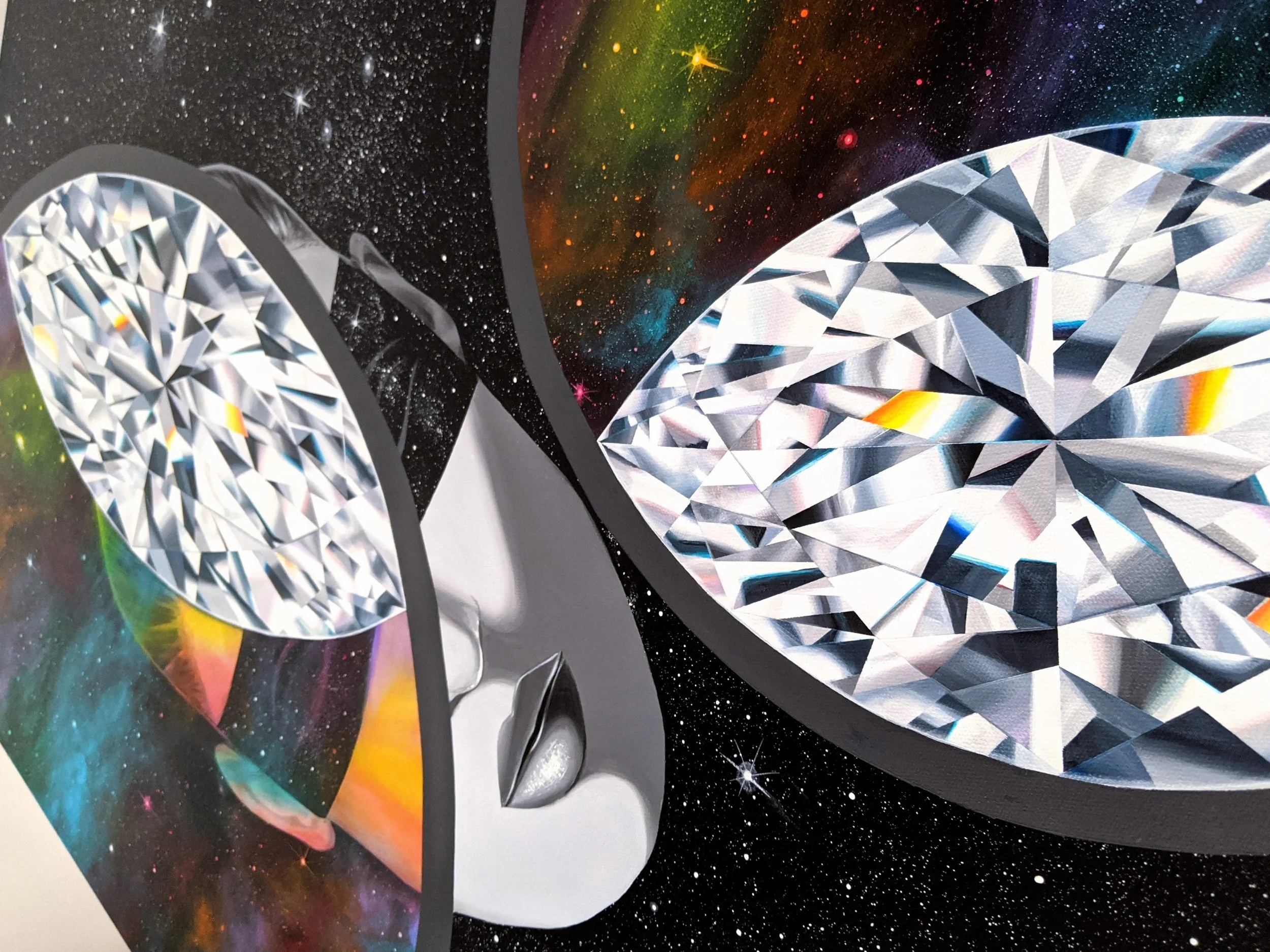
Reena Ahluwalia, The Third Eye (2020). An inquiry into light and endurance. The portals invite introspection, anchoring our temporary stories to a three-billion-year constant. Credit: Reena Ahluwalia.
A Philosophical Prism
The Billion-Year Paradox informs my canvas. As a visual artist, I do not paint diamonds to replicate their appearance; I engage with them as a philosophical prism. Through this lens, the stone is a physical record of survival under pressure—a geological grit that parallels the human spirit.
My work captures the internal frequency of human resilience, using the gemstone to study light as a medium of endurance. This is the Luminist approach: a lens into planetary and personal histories.
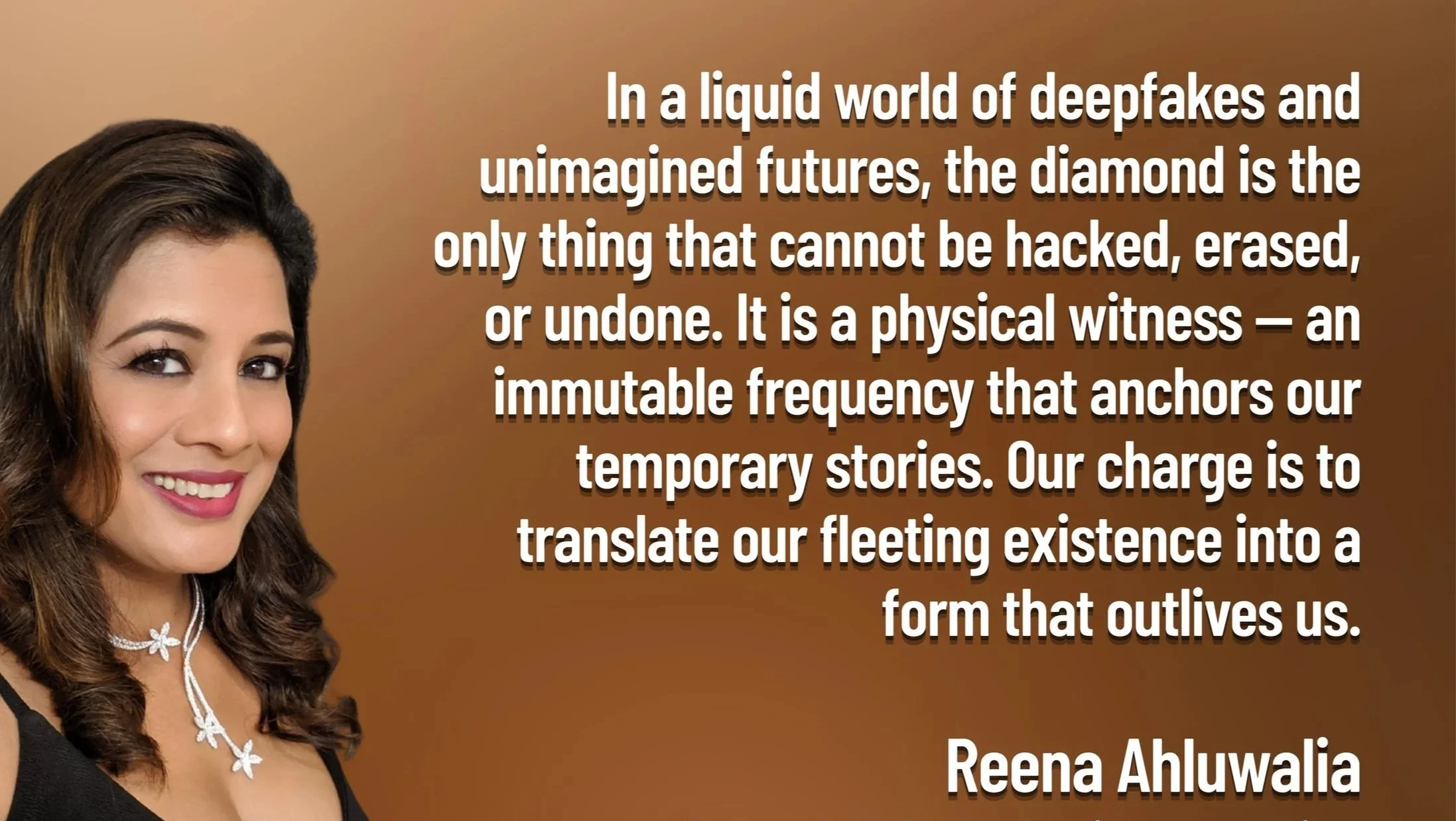
In a liquid world of deepfakes and unimagined futures, the diamond is the only thing that cannot be hacked, erased, or undone. It is a physical witness—an immutable frequency that anchors our temporary stories. Our charge is to translate our fleeting existence into a form that outlives us.
We never own the diamonds. We only borrow their forever.
The Billion-Year Paradox™ — A Philosophical Framework by Reena Ahluwalia
Definition: The relationship between a fleeting human life and the three-billion-year endurance of a natural diamond.
The Premise: Rooted in Vanitas and memento mori, this framework introduces the “Century Question”: How does a diamond’s legacy survive the hand that currently holds it? It redefines diamond ownership as stewardship — tethering a temporary human story to an immutable geological witness.
[Term and concept authored by Reena Ahluwalia, 2026]
