
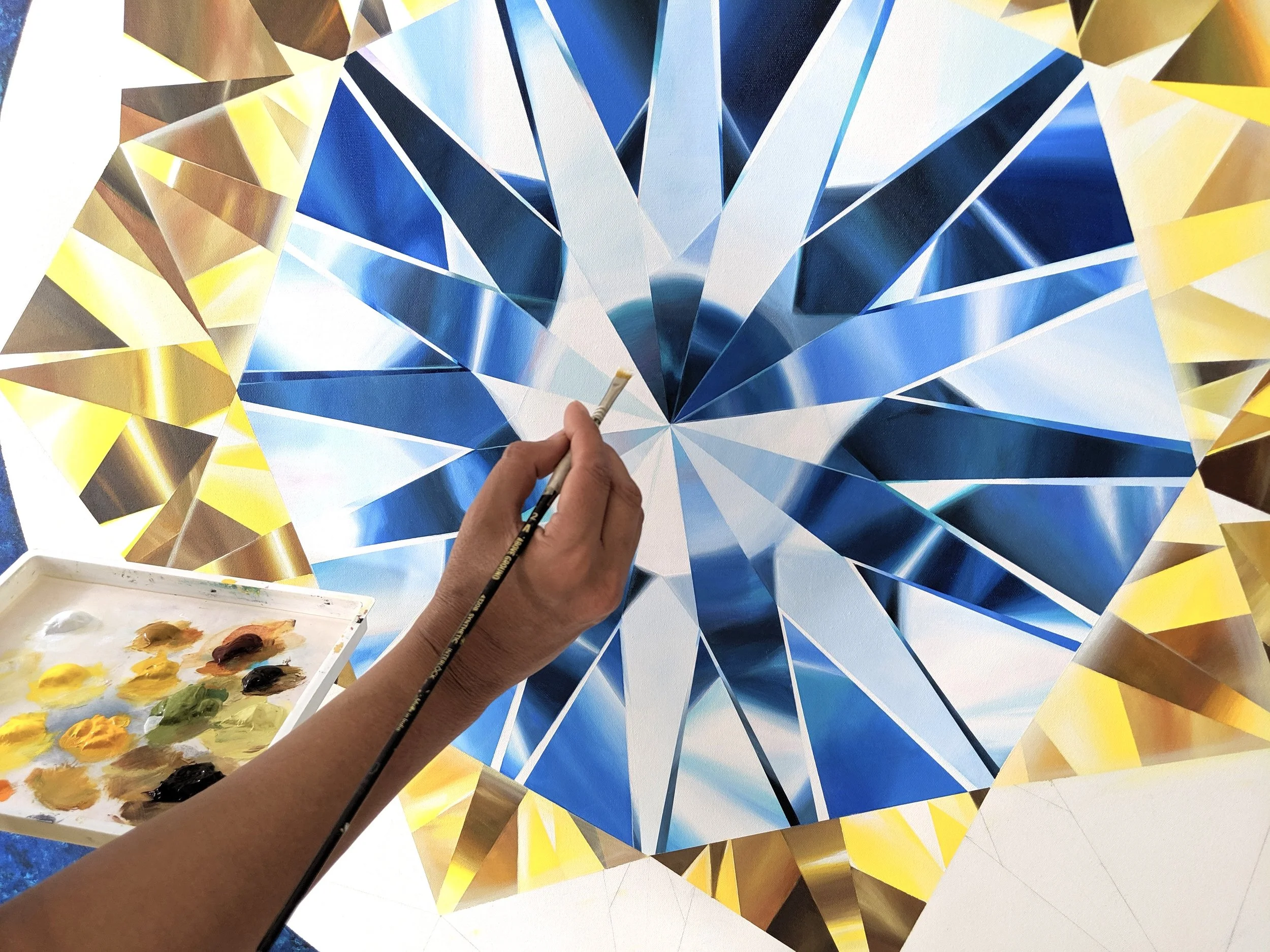
India has always known how to make jewellery speak. As India’s luxury jewellery market expands across regions and class, the question is no longer whether India has a jewellery tradition, but whether it is ready to define a new design language for its billion dreams. Its continuing evolution requires a shift, towards cultural authorship.
Read moreCovid-19 Shall Pass, But These Emerging Trends Will Drive The Jewelry Industry Ahead
[TORONTO, Canada] -- As I look out of my home-studio window, the daffodils and tulips are blooming, the cardinals are singing. It’s spring. It’s also 12 weeks into the lockdown.
In end-February, I landed home in Toronto from an extensive Asia visit. The day I flew from Thailand, the media was reporting on Covid-19 cases, so I self-isolated myself. Canada soon announced a countrywide lockdown. The world is in a crisis management phase since.

Reena Ahluwalia
JEWELRY INDUSTRY TRENDS HERE TO STAY POST COVID-19
The manner in which this pandemic is impacting global businesses, people and shaping our mindscapes is quite stunning. All this in a matter of a few months. I will leave out the topics of online platforms, digital & social media strategies, webinars that have all been widely discussed and are of importance. What I want to share instead are my views on emerging cultural and consumer trends that will impact our business going forward.
1. Post-pandemic Consumer Behaviour
The Covid-19 crisis has taught us the value of things, of what is necessary versus discretionary. In lockdown mode, people made use of what they already had or was essentially needed. Will that mean moving away from over-consumption to meaningful consumption? Possibly. If you notice closely this was an emerging trend, now fuelled further by the Covid-19 crisis. What does it mean for the global jewelry industry which relies on discretionary spending? One of the answers I feel is to look at how we can narrate jewelry with purpose driven, meaningful consumption and one that responds to consumer's overall mental, physical and financial wellbeing.
2. Nature & Sustainability
Our jewelry industry is closely linked to nature's bounty - metals, diamonds and gemstones. I believe this crisis is sending a strong signal to humanity. To prevent future climate catastrophe and spread of deadly diseases, we have to step up and refocus our energy in nurturing nature and in our sustainability efforts. For consumers the climate issue is going to resurface once the Covid-19 crisis starts becoming manageable. Can we as an industry urge action through meaningful engagement? One of the most effective ways to tackle climate change is through purpose-led actions coming from design thinking. People deeply care about climate and connection to the natural world. I am one of them. I bike and haven't owned a car in decades. I reuse, recycle and avoid waste. I am also conscious of companies I buy from. What we wear is a big part of our personal identity, and that's what jewelry does so well, it lets us show who we are to the world.
3. Value, Meaning and Purpose
Now, more than ever we need a connection to who we are, what we love and how we show it. Jewelry is about our personal identity, celebration and dreams. Consumers will return to jewelry, but with a changed perspective. They will return and look for jewelry with meaning, purpose, positivity, joy and deep personal connection to who they are and what they value. This must reflect in our jewelry designs. It must reflect how wearing jewelry makes us feel.
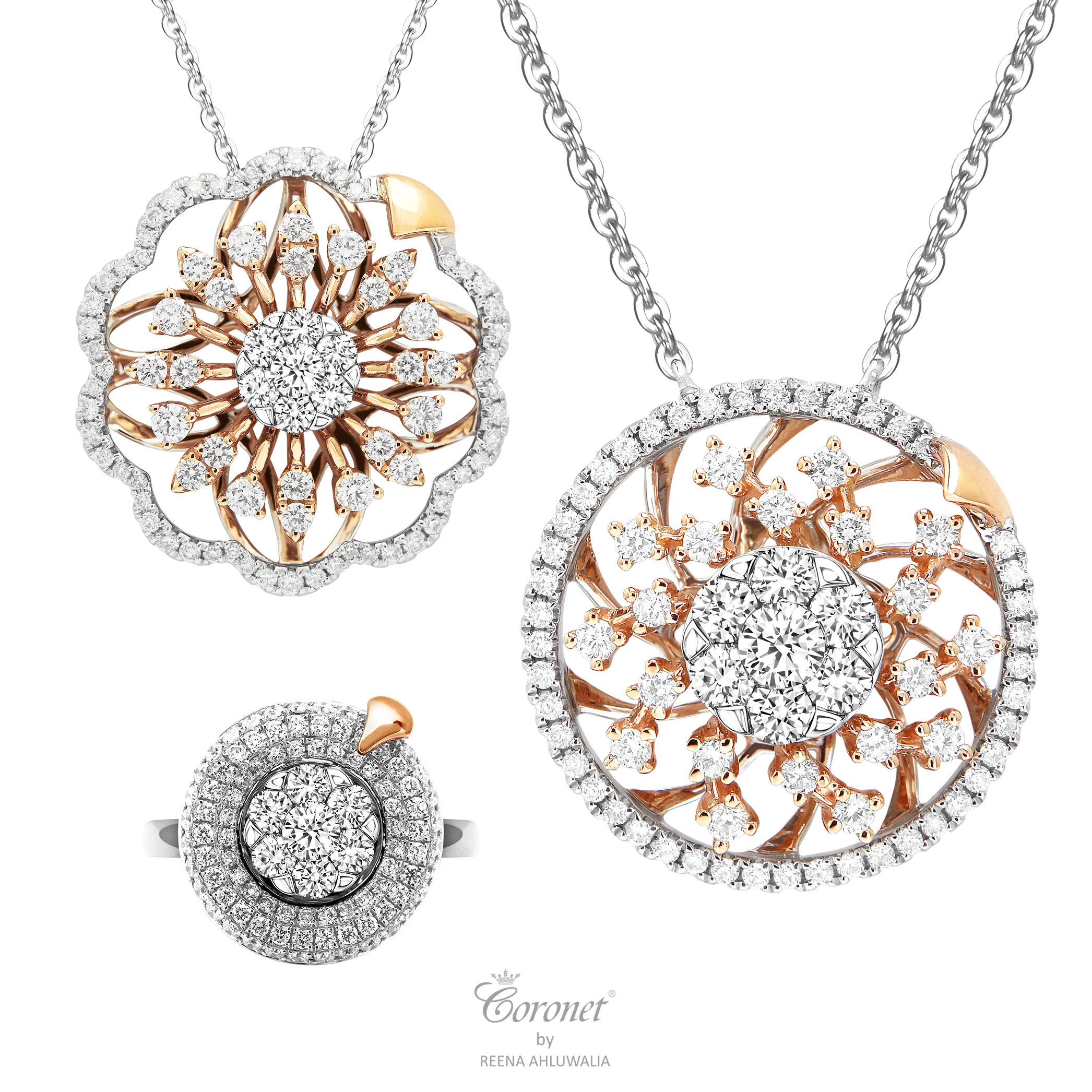
The ‘Inner Brilliance’ spinning diamonds collection from ‘Coronet by Reena’. A pointer points to the true center, reminding what's most valuable to us; our family, values, goals and milestones. ©Design Copyright. Patented setting.
MY PERSONAL FOCUS
Like most of us, my first concern once the pandemic hit was the safety of my family, my team, friends and those experiencing dire situations amid this crisis around the world. I made early donations to some of the organizations that I support. Now that I look back, it was timely.
Soon, I started reorganizing my days and priorities to tackle the many challenges that the lockdown has brought to my business. I am also helping a few emerging jewelry designers who are entering the world of jewelry on how to navigate this tough landscape. I am reading books that were on my 'To Read' list, cooking, and exercising. In this environment of digital overload, I am very careful of what I choose to watch, hear and consume digitally. I call those my 'essentials'. Social isolation is difficult, so I am constantly reminding myself to take care of my mental, physical and spiritual self.
Being a jewelry designer and artist, I am used to very long studio hours and creating in isolation. That focus came in handy. The current crisis has made me think even deeper about my values, connection to nature and how I want to contribute in future. This thinking has guided me to create with a renewed purpose.
Check out my latest diamond paintings from the LIT Series. You will know what I mean.

No amount of darkness can hide sparks of light. The LIT Series of diamond paintings by Reena were painted during the Covid-19 crisis. Dedicated to all heroes, the paintings celebrate our shining human spirit. ©Copyright.
Finally, I hope you are not pushing for hyper-productivity and forcing unrealistic goals causing performance anxiety. I can only share my experience and what works for me and hope you will consider it. I feel this crisis is a time to attune yourself to what's happening around you. Feel it, think about it and explore your ideas. The best creative solutions are when all these elements interconnect and harmonize.
We will come out of this crisis altered, but with true inner light, sense of purpose and clarity of direction.
I wouldn't wish anything less for you.
Heart of Gold - A Yellow Heart-Shaped Diamond Painting By Reena Ahluwalia
It’s that heart of gold, and stardust soul that make you beautiful!
The best and most beautiful things in the world cannot be seen or even touched - they must be felt with the heart. Isn't a heart of gold the best treasure of all? Capturing the warm glow of sun rays, 'Heart of Gold' is my yellow heart-shaped diamond painting, one of three heart-shaped diamond painting from the Diamond Portrait Series. I went ahead and added real natural diamond dust with paint in the painting, the diamond dust sparkles when it catches light.
The most romantic of all diamonds, heart-shaped diamonds are often referred to as an extremely popular fancy cut and the ultimate representation of love. I love working with heart-shaped diamonds for my jewelry creations. So much so that I wrote about most Famous Heart-Shaped Diamonds in history.
Here are a few images of the painting and process...

'Heart of Gold' - Portrait of a Yellow Heart-Shaped Diamond
36 x 36 inches. Natural Diamond Dust and Acrylic on Canvas. ©Reena Ahluwalia

Close-up detail of the 'Heart of Gold' - Portrait of a Yellow Heart-Shaped Diamond. 36 x 36 inches. Natural Diamond Dust and Acrylic on Canvas. ©Reena Ahluwalia

When you shine, the world shines with you! In progress, 'Heart of Gold' - Portrait of a Yellow Heart-Shaped Diamond. 36 x 36 inches. Natural Diamond Dust and Acrylic on Canvas. ©Reena Ahluwalia

Be the light in someone's life! In progress, 'Heart of Gold' - Portrait of a Yellow Heart-Shaped Diamond. 36 x 36 inches. Natural Diamond Dust and Acrylic on Canvas. ©Reena Ahluwalia
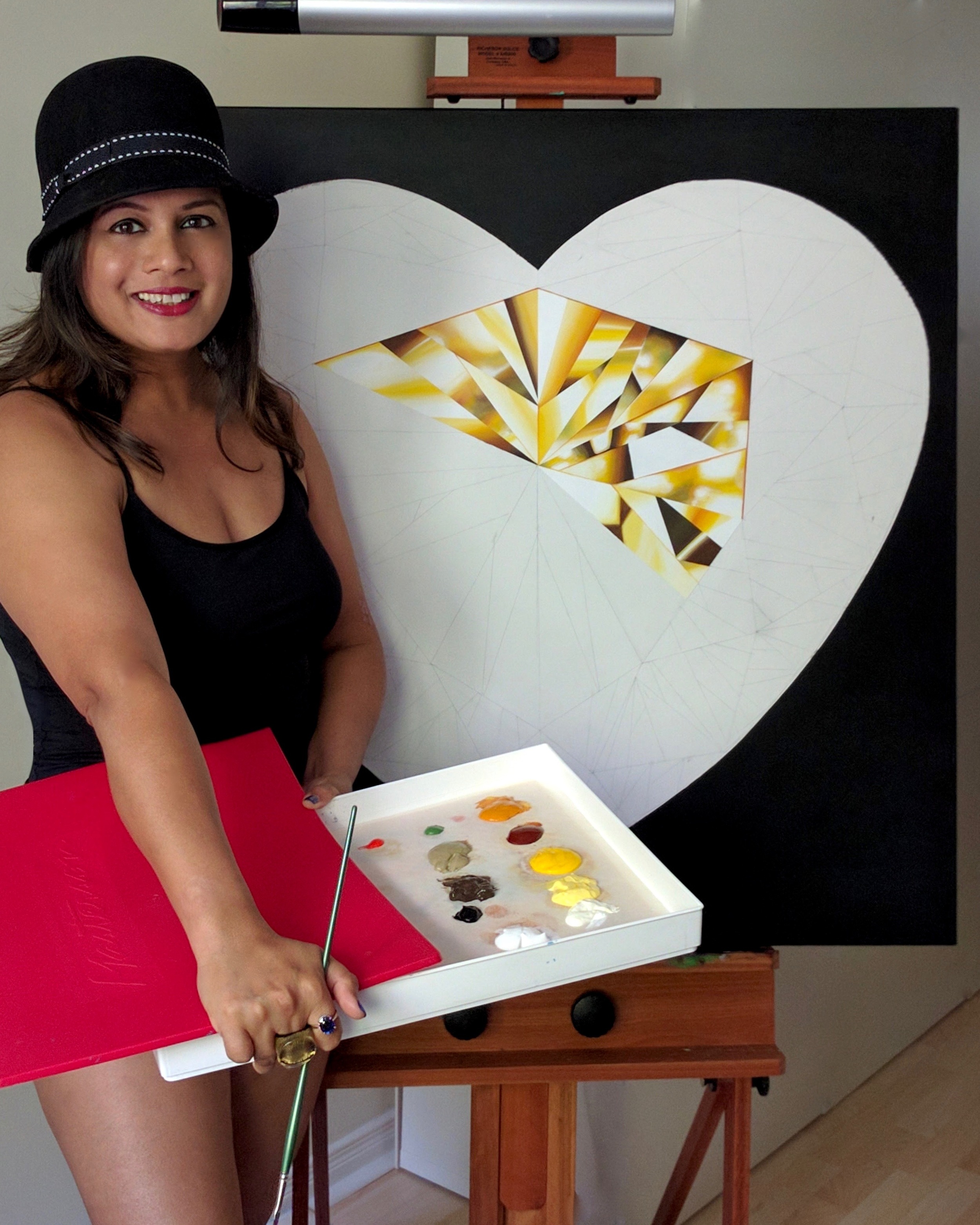
It’s that heart of gold, and stardust soul that make you beautiful! Making of the 'Heart of Gold' - Portrait of a Yellow Heart-Shaped Diamond. 36 x 36 inches. Natural Diamond Dust and Acrylic on Canvas. ©Reena Ahluwalia

Unlocking the heart of gold, one brush stroke at a time! Making of the 'Heart of Gold' - Portrait of a Yellow Heart-Shaped Diamond. 36 x 36 inches. Natural Diamond Dust and Acrylic on Canvas. ©Reena Ahluwalia
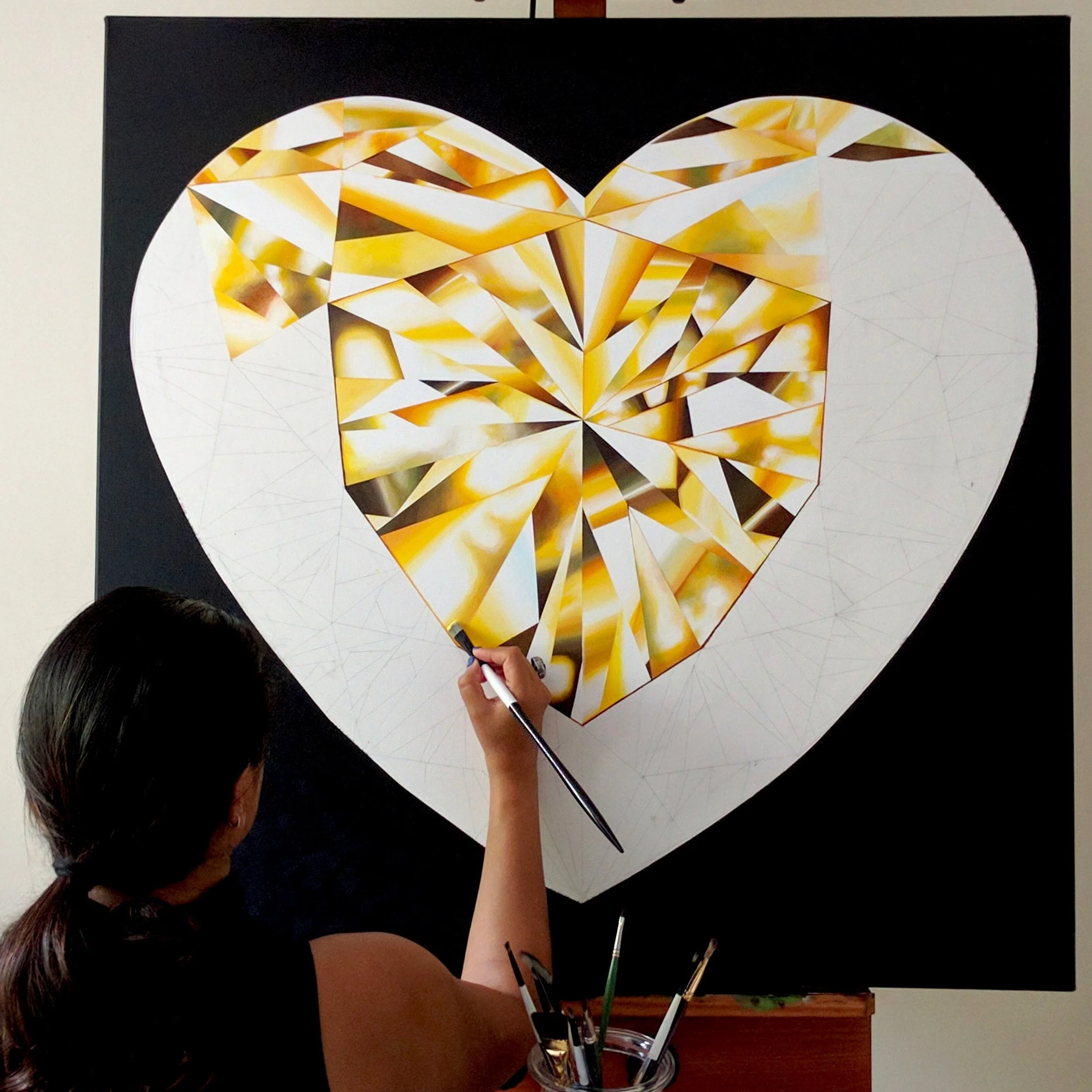
Let's follow our heart, it leads to our dreams! 'Heart of Gold' - Portrait of a Yellow Heart-Shaped Diamond. 36 x 36 inches. Natural Diamond Dust and Acrylic on Canvas. ©Reena Ahluwalia

Setting heart on fire, one facet at a time! Progress of 'Heart of Gold' - Portrait of a Yellow Heart-Shaped Diamond. 36 x 36 inches. Natural Diamond Dust and Acrylic on Canvas. ©Reena Ahluwalia

Real diamond dust, a signature of Reena Ahluwalia paintings. ©Reena Ahluwalia

Reena Ahluwalia with her trio of diamond paintings. To see the other paintings of this series, please check out the 'Diamond Portrait Series' by Reena.
Passionate Heart - A Pink Heart-Shaped Diamond Painting By Reena Ahluwalia
Life is short. If there was ever a moment to follow your passion and do something that matters to you, that moment is now.
Celebrating a heart full of passion, 'Passionate Heart' is my pink heart-shaped diamond painting, one of three heart-shaped diamond painting from the 'Diamond Portrait Series'. Pink diamonds are extremely rare diamonds and are the hot favorite of collectors and connoisseurs. The most romantic of all diamonds, heart-shaped diamonds are often referred to as an extremely popular fancy cut and the ultimate representation of love. I love working with heart-shaped diamonds for my jewelry creations. So much so that I wrote about the most Famous Heart-Shaped Diamonds in history.
Here are a few images of the painting and process...
Live with passion, follow your heart!
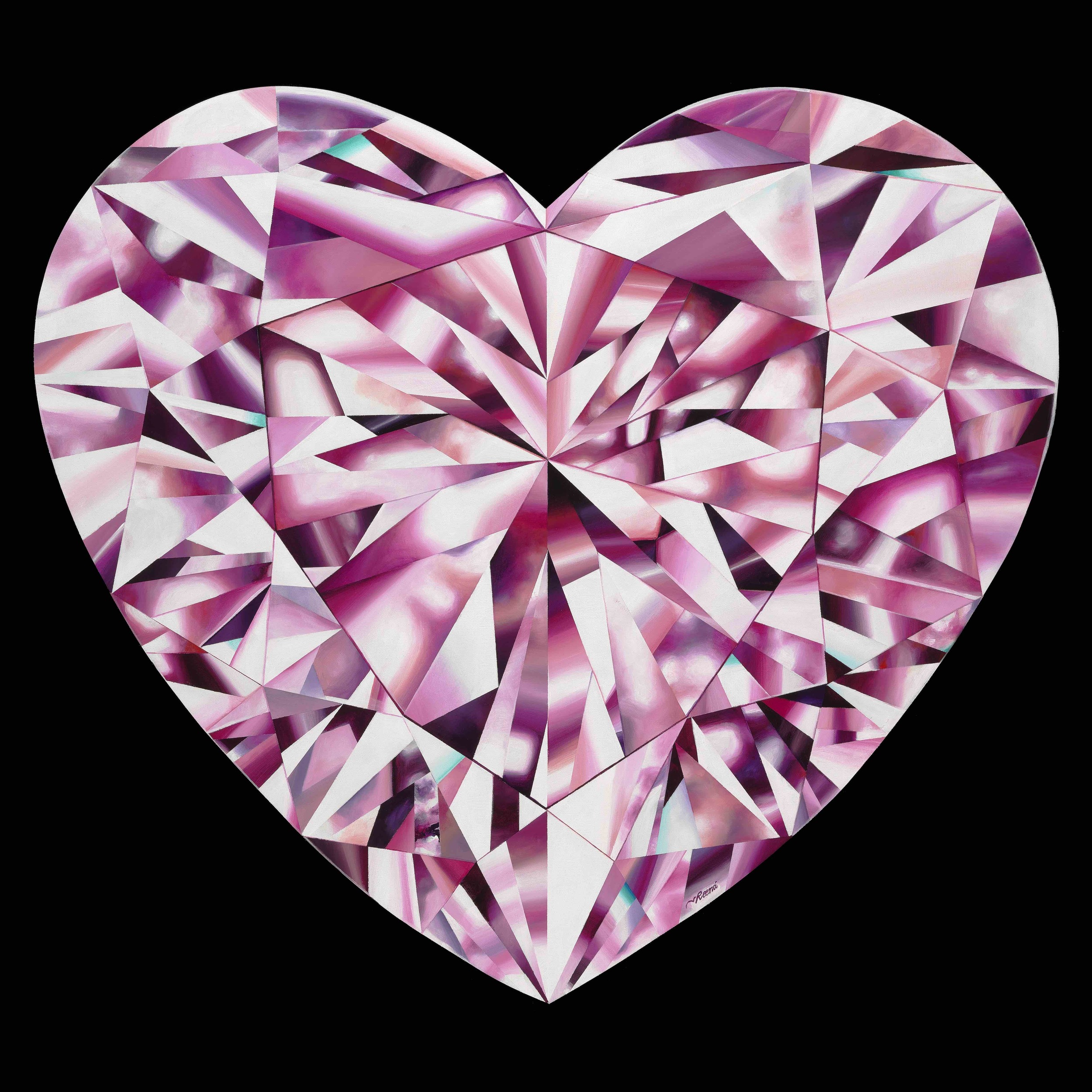
'Passionate Heart' - Portrait of a Pink Heart-Shaped Diamond
36 x 36 inches. Acrylic on Canvas. ©Reena Ahluwalia
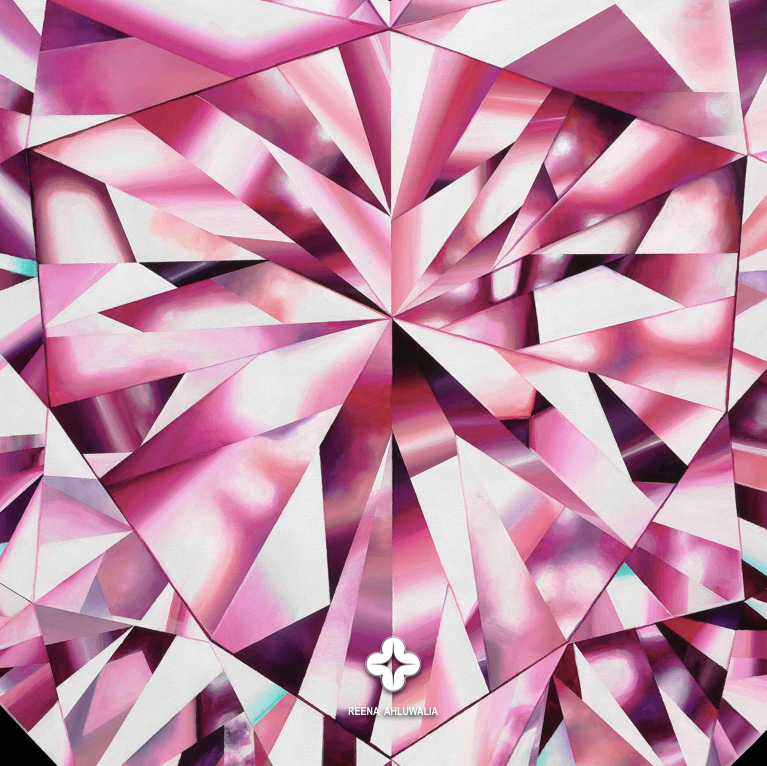
Close up detail. 'Passionate Heart' - Portrait of a Pink Heart-Shaped Diamond. 36 x 36 inches. Acrylic on Canvas. ©Reena Ahluwalia
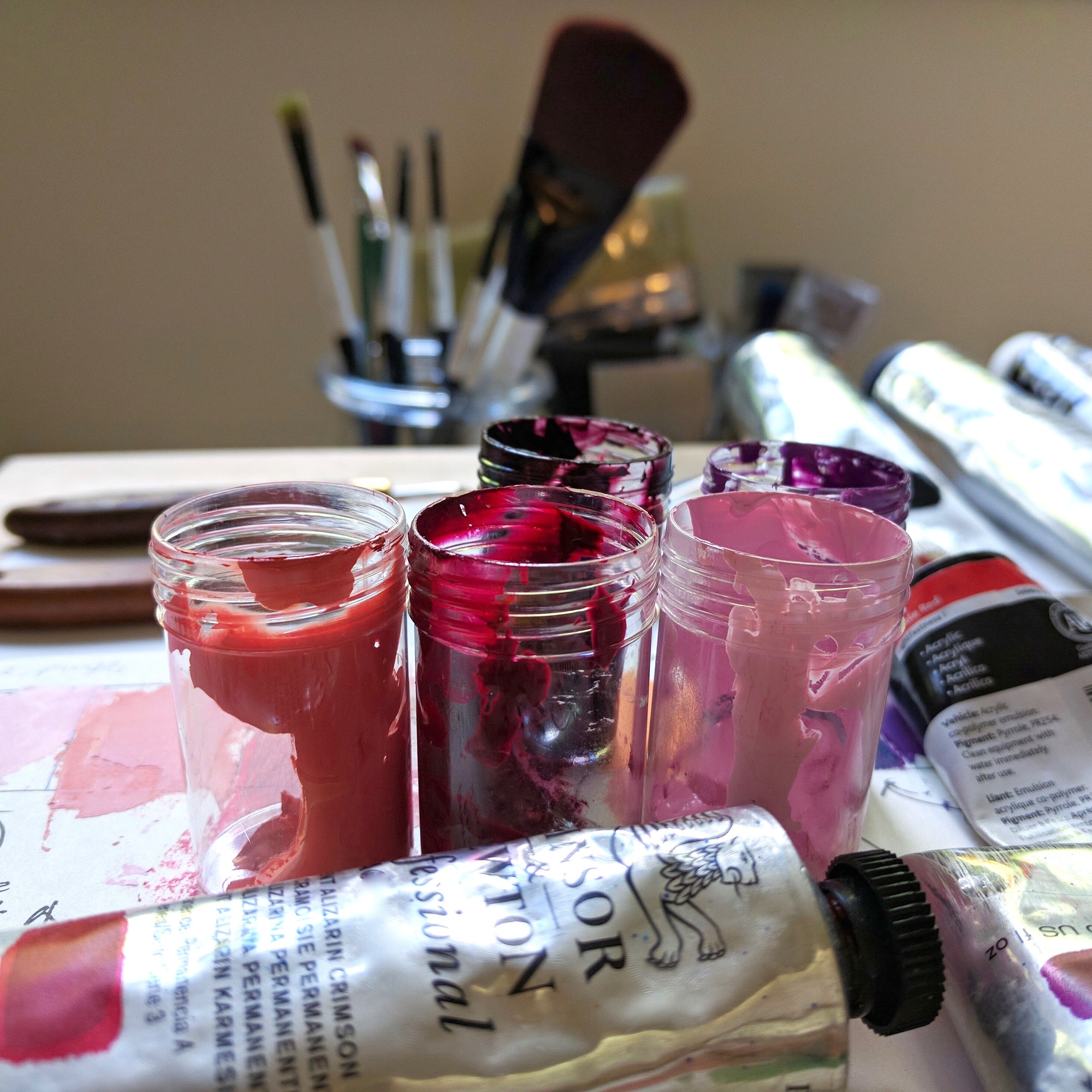
Preparing color palette for my pink 'Passionate Heart' diamond painting. Coloration within a pink diamond is highly nuanced. ©Reena Ahluwalia
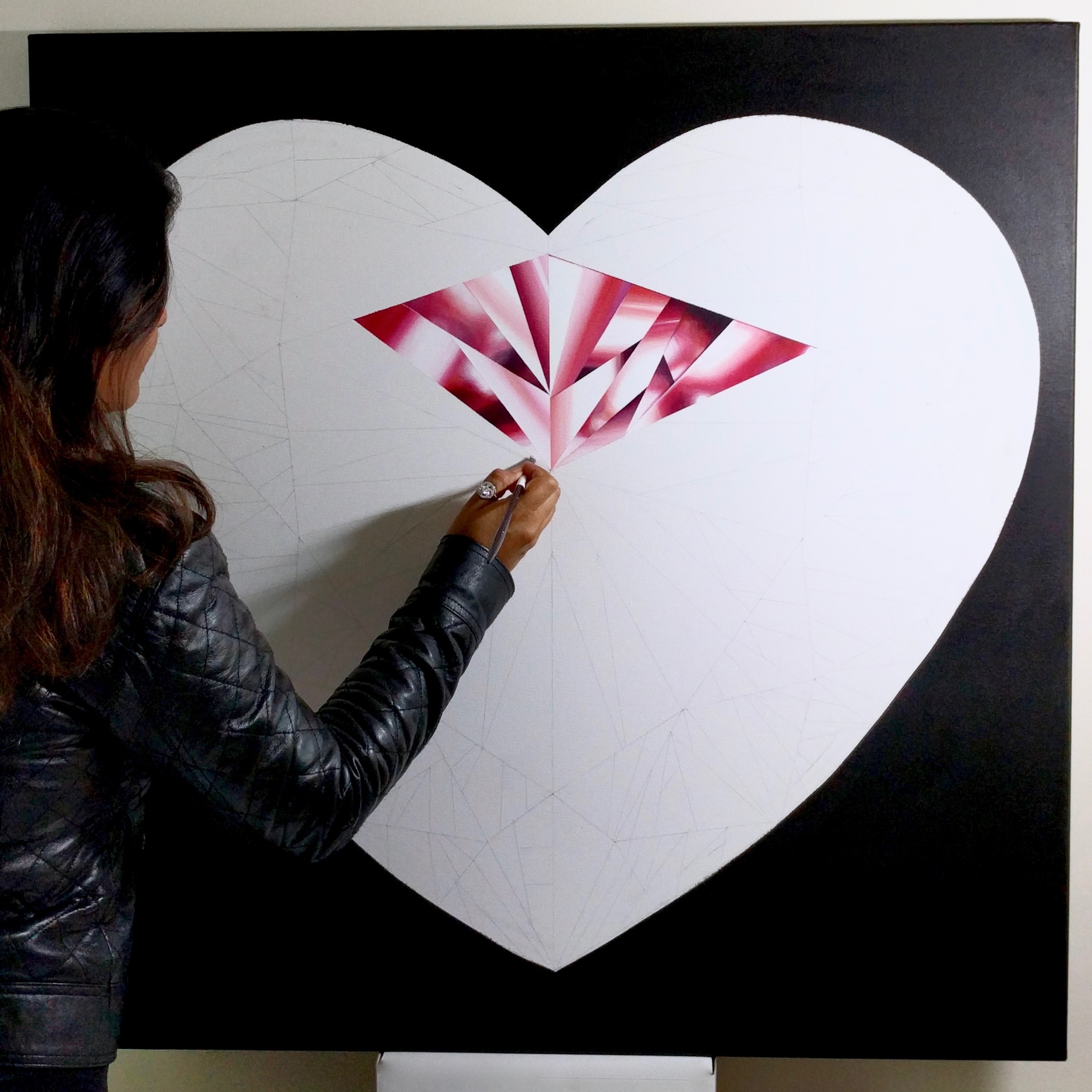
Life full of passion is a beautiful one! Reena Ahluwalia in her studio working on the 'Passionate Heart' - Portrait of a Pink Heart-Shaped Diamond. 36 x 36 inches. Acrylic on Canvas. ©Reena Ahluwalia

Do it with passion or not at all! In progress, 'Passionate Heart' - Portrait of a Pink Heart-Shaped Diamond. 36 x 36 inches. Acrylic on Canvas. ©Reena Ahluwalia
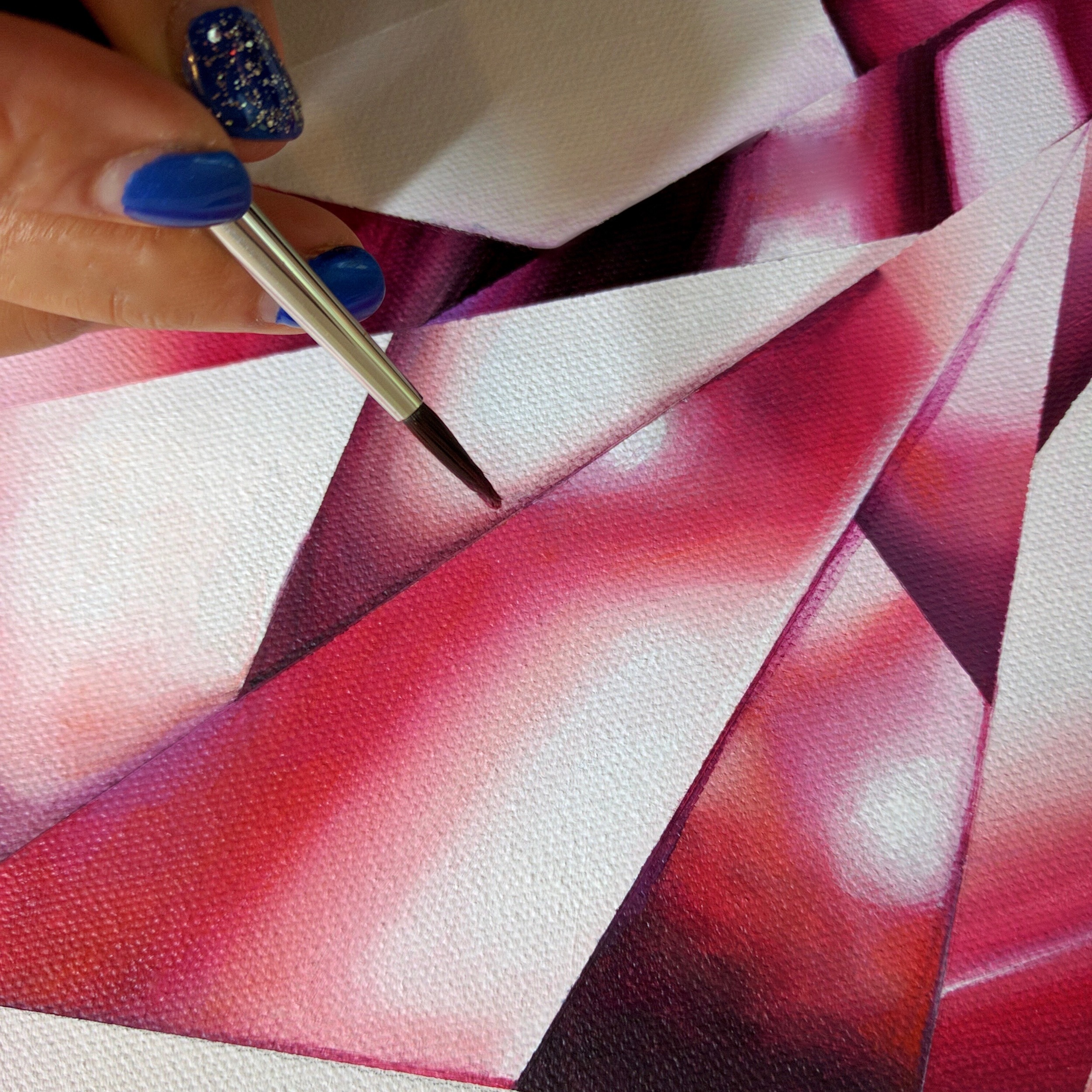
Diamond facets are so beautiful and detailed, don't you think? Just like a heart ... you look into its depths, you find so much more to love. Facet details of 'Passionate Heart' - Portrait of a Pink Heart-Shaped Diamond. 36 x 36 inches. Acrylic on Canvas. ©Reena Ahluwalia

Reena Ahluwalia at her studio working on the 'Passionate Heart' - Portrait of a Pink Heart-Shaped Diamond. 36 x 36 inches. Acrylic on Canvas. ©Reena Ahluwalia
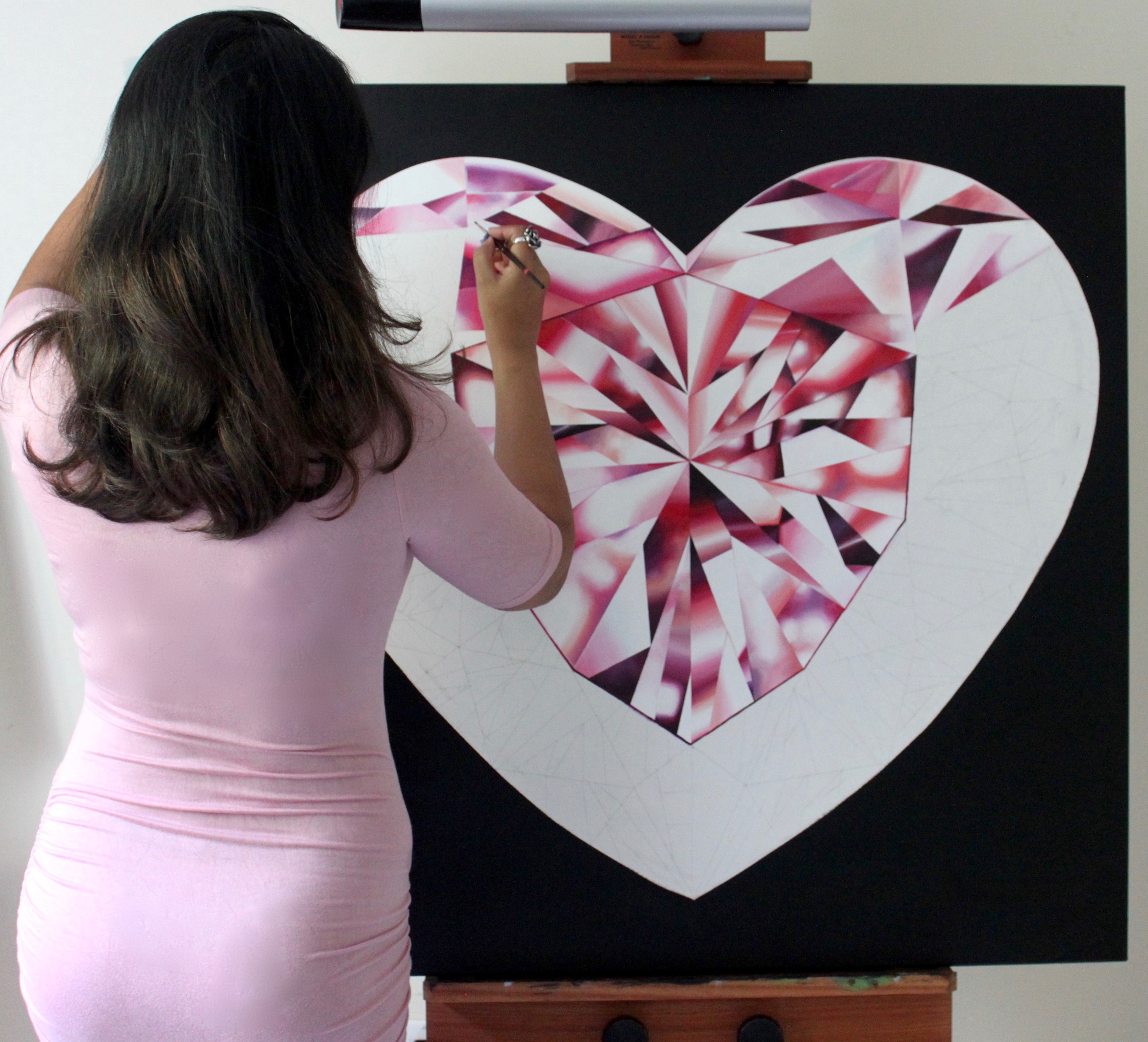
Reena Ahluwalia at her studio working on the 'Passionate Heart' - Portrait of a Pink Heart-Shaped Diamond. 36 x 36 inches. Acrylic on Canvas. ©Reena Ahluwalia
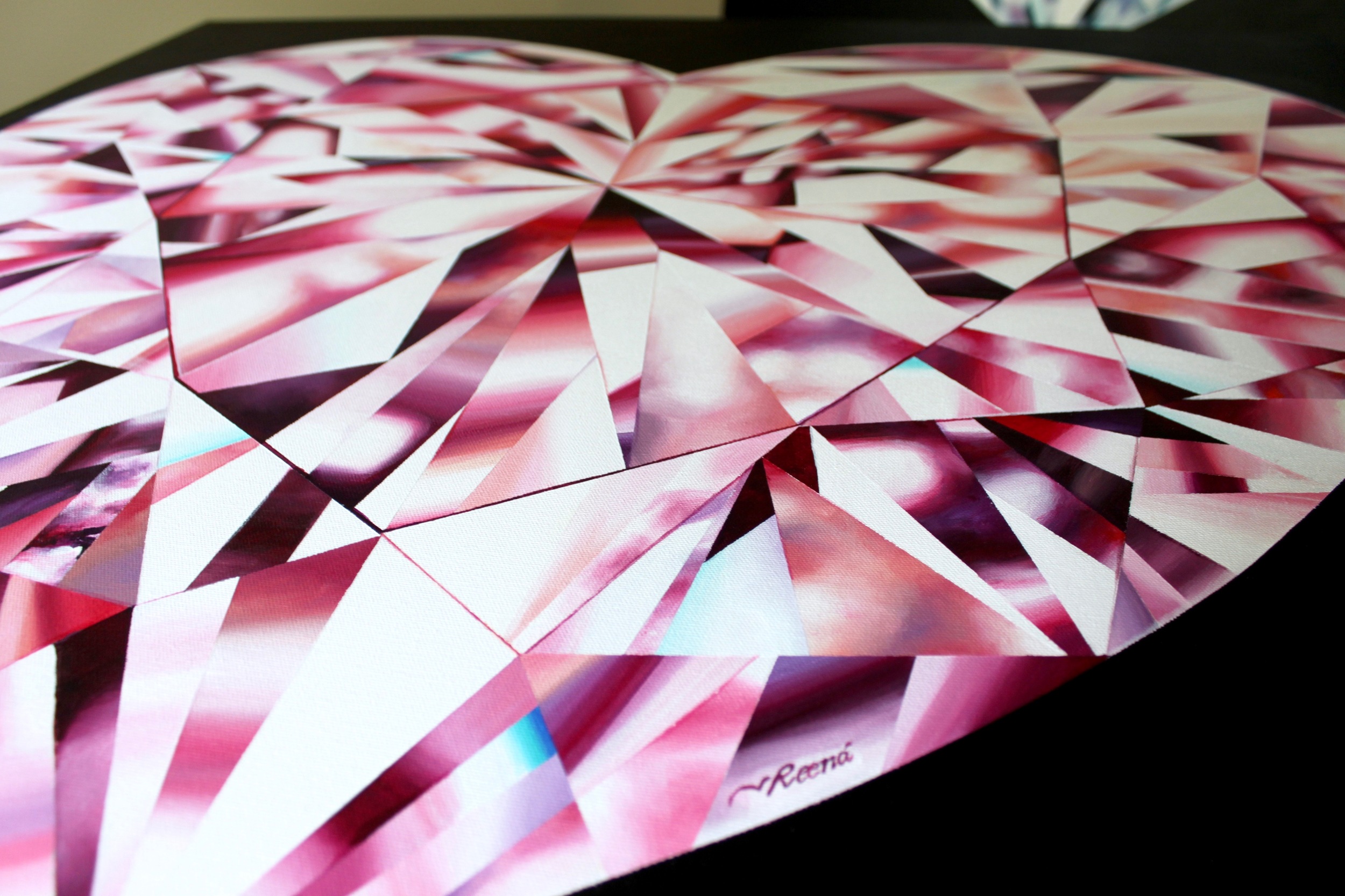
Completed and signed! 'Passionate Heart' - Portrait of a Pink Heart-Shaped Diamond. 36 x 36 inches. Acrylic on Canvas. ©Reena Ahluwalia
Connect with Reena
The Portrait Of Luminosity - An Oval Cut Yellow Diamond Painting By Reena Ahluwalia

'The Portrait of Luminosity' - Portrait of an Oval Cut Yellow Diamond
60 x 48 inches. Acrylic on Canvas. ©Reena Ahluwalia
A bright and luminous oval cut yellow diamond of epic proportions...
Read moreThe Portrait of Perfection - A Pear Shaped Diamond Painting by Reena Ahluwalia
![“The Portrait of Perfection” - Portrait of a Pear Shaped Diamond 60”x 48" [5.0 x 4.0 Ft]. Acrylic on Canvas. ©Reena Ahluwalia](https://images.squarespace-cdn.com/content/v1/518ee9e6e4b02c1428e17e12/1454337554599-5N8C9SR2AKZ5N27L6IUJ/Portrait+of+Perfection_Pear+Shaped+Diamond+Painting_Art_By+Reena+Ahluwalia_Jeweler+Who+Paints)
“The Portrait of Perfection” - Portrait of a Pear Shaped Diamond
60”x 48" [5.0 x 4.0 Ft]. Acrylic on Canvas. ©Reena Ahluwalia
From the "Diamond Portrait Series", here is "The Portrait of Perfection" - a flawless and perfect pear shaped diamond...
Read moreIn the Name of Halloween - "Sorceress Diabolic"
All in the spirit of Halloween! I present to you...
"Sorceress Diabolic" - is a jewelry design concept by Reena Ahluwalia.
"On a fatal night, at the witching time, the starless sky laments black and unmoving. The shadowy moon floats above. In this forbidden depths of darkness, prowls a diabolic sorceress with magic spells and dangerous enchantments. In her mask-macabre, glimmering like countess diamonds are trapped hopeless enchanted souls."

"Sorceress Diabolic" - a contemporary face-mask, designed to exaggerate and intensify the dark Sorceress’s legend. Concept drawing by Reena Ahluwalia.

Mask components are angular and pointed, recalling the sharp teeth of howling wolves and outstretched wings of ravens. Like a visual warning, a separate mouthpiece mimics teeth and fangs. Concept drawing by Reena Ahluwalia.
Ode to Fall

“Every leaf speaks bliss to me, fluttering from the autumn tree” - Emily Brontë
I love the splendor and crispness of Fall! Do you as well?
My ‘Autumn’ creation was inspired by the golden, graceful falling dry leaves of Fall. The leaves of this necklace can be detached. Once separated, the leaves can be worn individually as pendants, necklaces and multiple brooches.
The ‘Autumn’ necklace won the National Design Award in Jewelry - ‘Swarnanjali’ by the World Gold Council and was my first design award ever.

Ode to Fall - 'Autumn' necklace by Reena Ahluwalia. 22 K yellow gold.
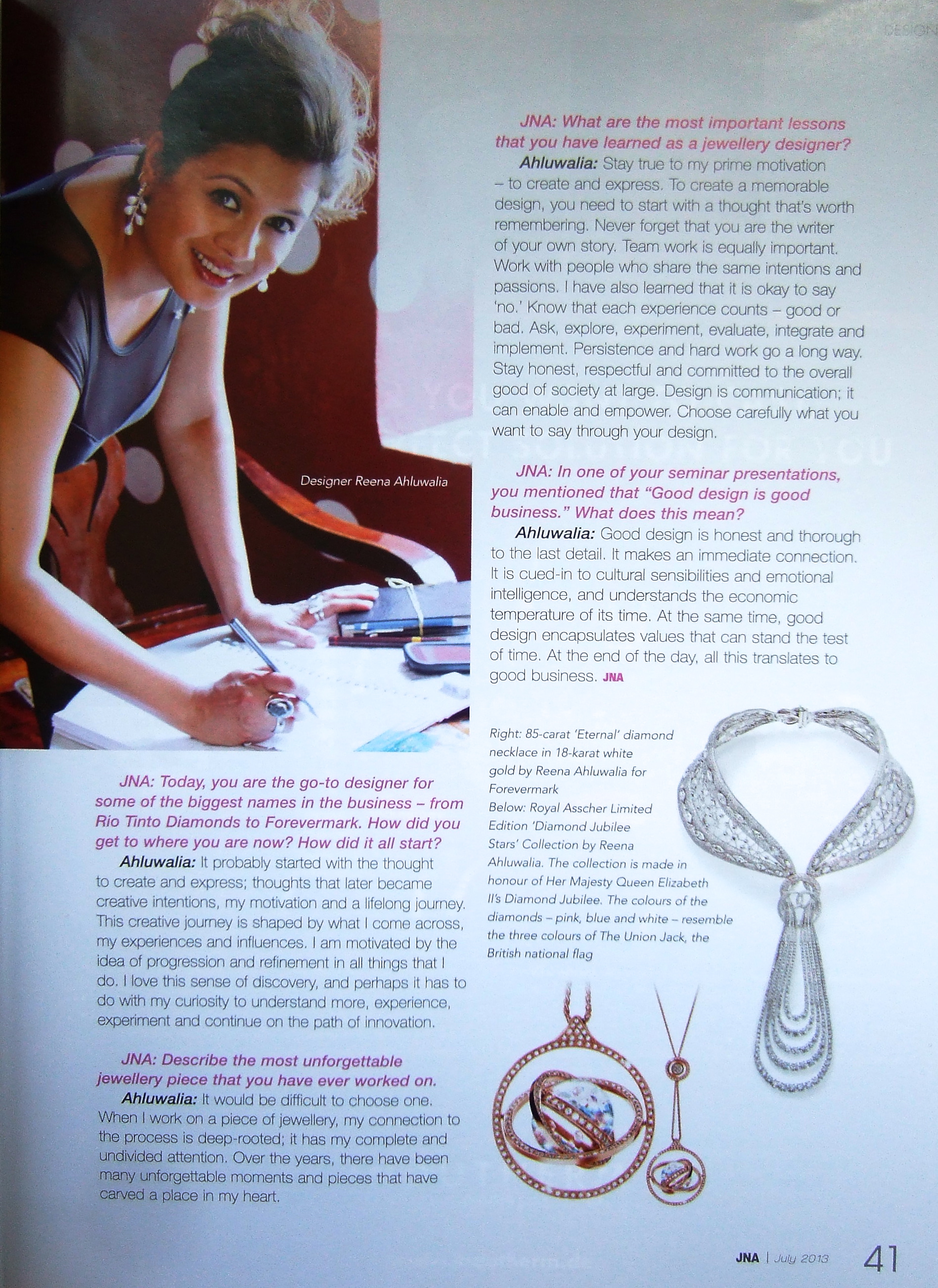
JNA Interview - Reena Ahluwalia
Jewellery News Asia features an interview with designer Reena Ahluwalia in their July 2013 Issue 347. Interview by Marie Feliciano, Editor, JNA.
About JNA Magazine: Jewellery News Asia is a leading monthly news magazine for the world's jewellery trade; diamond, pearl, gemstone and jewellery-making equipment and supplies sectors in Asia. Every month Jewellery News Asia features original reports by experienced journalists.
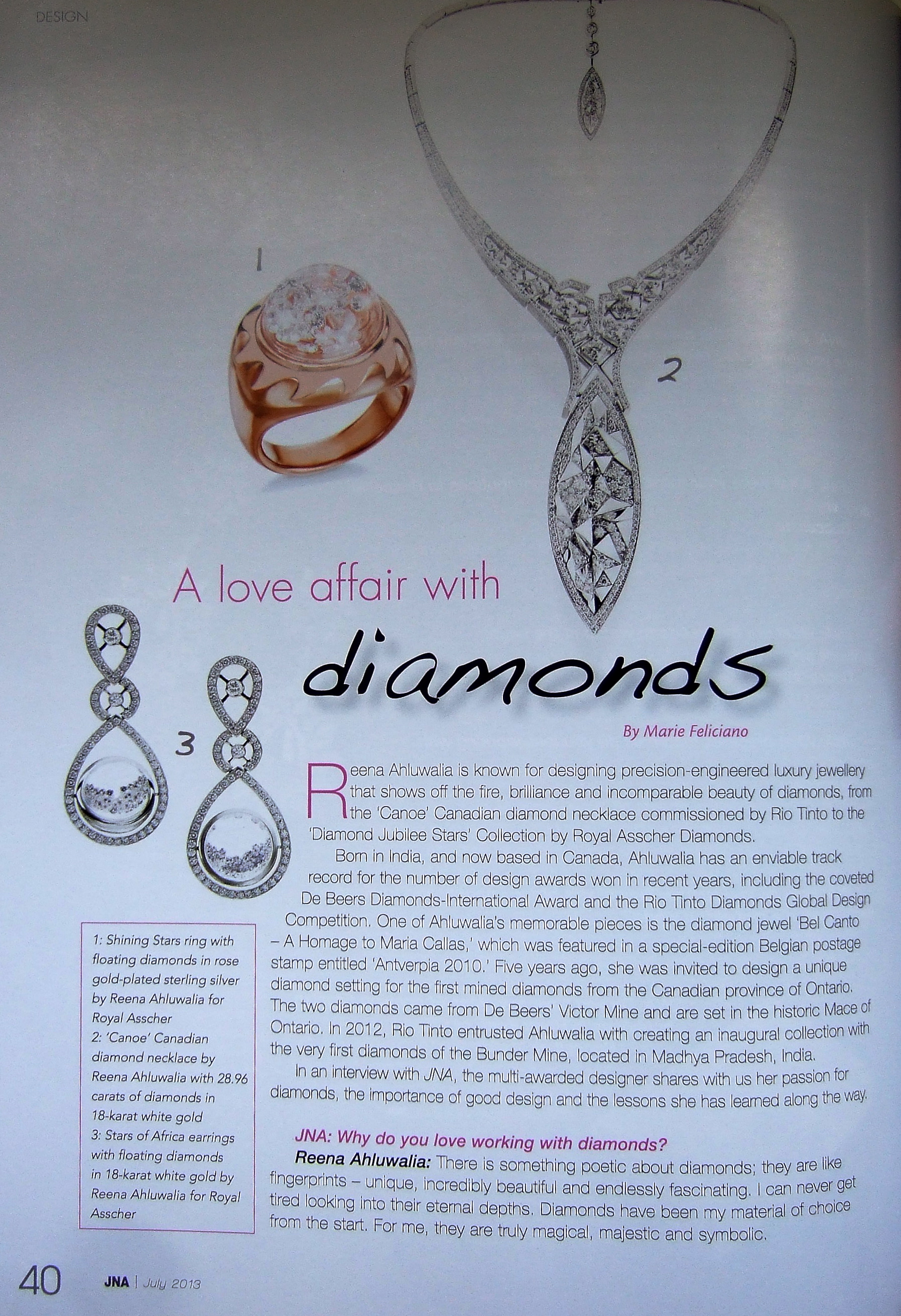
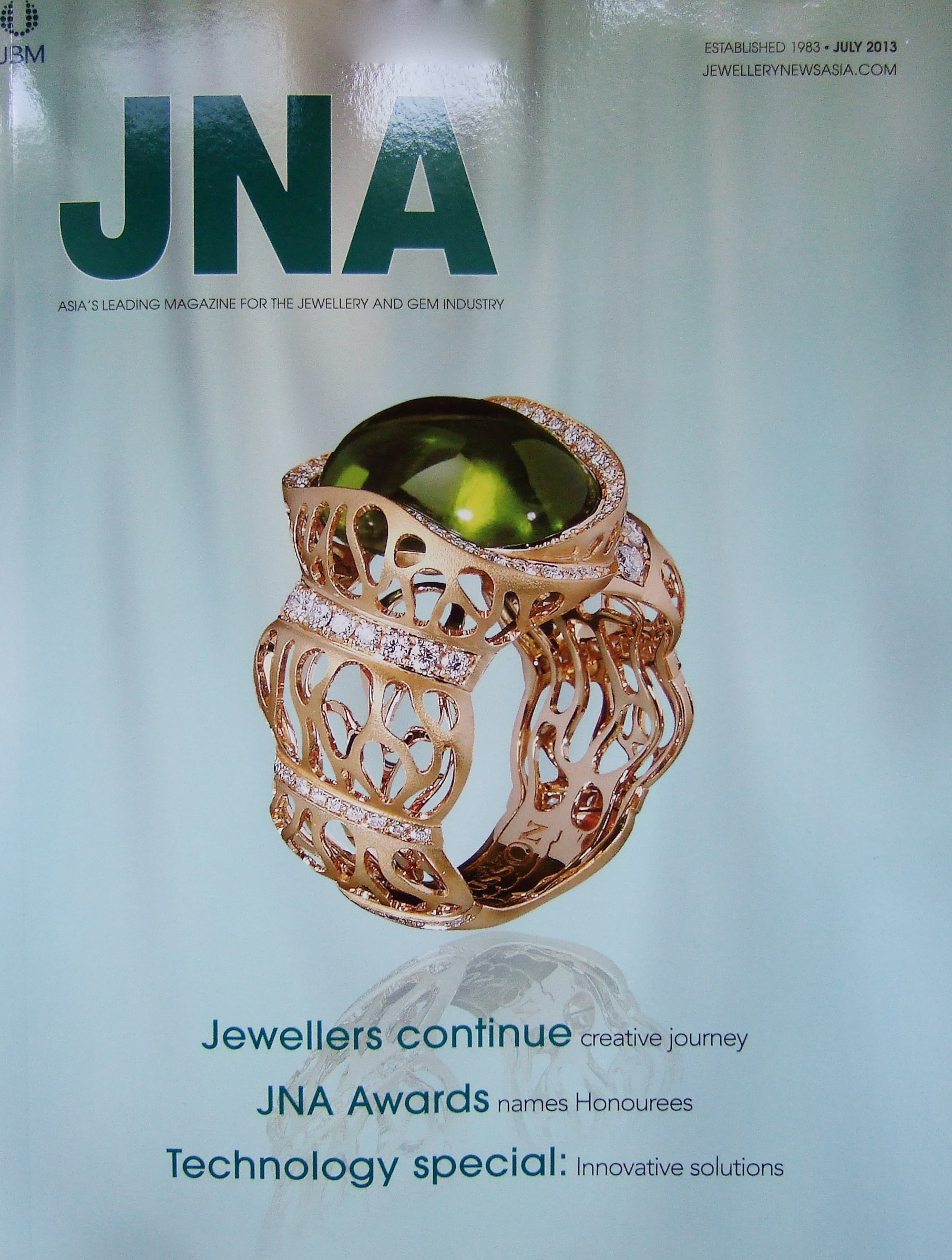
Cover - Jewellery News Asia, July 2013 Issue 347
For The Love Of Diagonals
Directional | Dramatic | Dynamic - Diagonals intrigue me.
One of the ways, I figure, I look at things is by finding the logic of mathematics in forms, shapes, patterns and their relation to each other. It happens seamlessly and rather quietly.
To me there is something special about how diagonals render activity, emphasis, movement, speed and emotion. I am in the process of generating ideas for a high-value diamond. I have a feeling that diagonals will play a decisive role in its final destiny.
When eyes follow, so does the emotions!
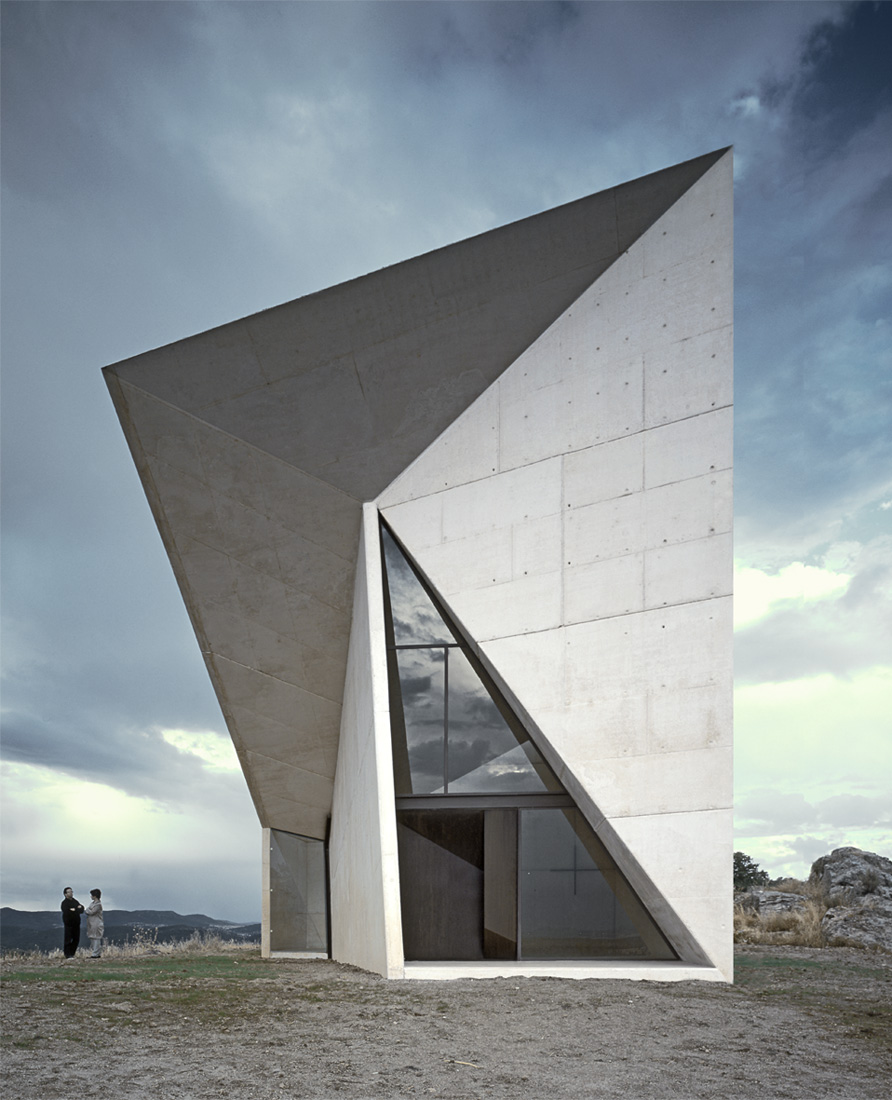
Image: Chapel in Villeaceron By Sancho Madridejos Architecture Office

Image: Marcel Breuer - Hungarian-born modernist, architect and furniture designer.
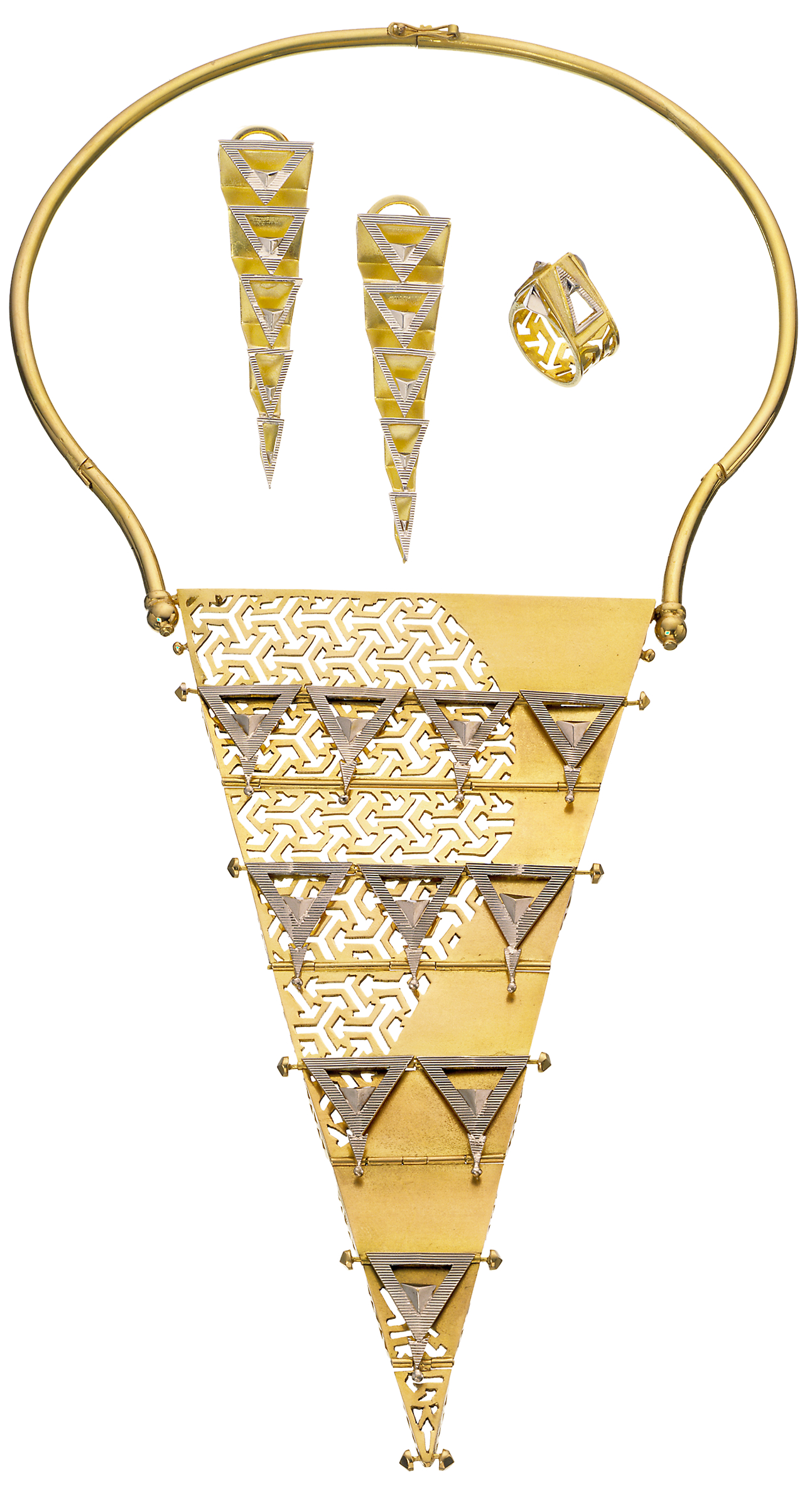
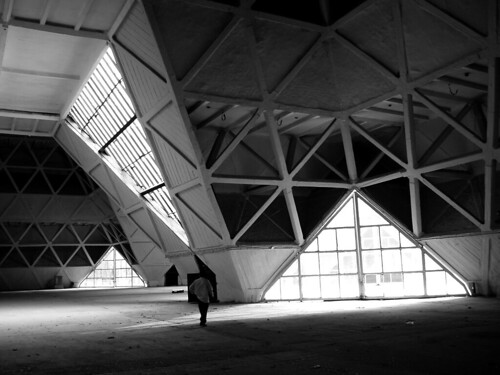
Image: ‘Gold Virtuosi’ ensemble by Reena Ahluwalia. 18K white and yellow gold. 12 inch necklace transitions from 2D to 3D. Composed of diagonal planer elements and triangles; each plate is hinged and folds like pleats to create a 3D form. Inspired by Pragati Maidan, a large convention center in New Delhi, India. The impression it left on me, resulted in a gold jewel. I found the interplay of open and closed spaces fascinating, as they almost assume human qualities. A meeting place, coming together of minds, blending and forming.

Exploration drawings by Reena Ahluwalia. Lower left drawing shows how necklace transitions from 2-dimensional to 3-dimensional form.
Canada, you inspire!

Image: LarryJW
Canada is my home.
A land of openness, pristine white winters, diversity and vibrant mosaic of thoughts and ideas. This work captures one of my first impressions of Canada and Canadian landscape - fluid, open, assured and monumental.

'Glacier' ring by Reena Ahluwalia for Mayur Davé (Gems) Inc. Canadian diamonds set in 18K white gold.

'Glacier' ring by Reena Ahluwalia for Mayur Davé (Gems) Inc. Canadian diamonds set in 18K white gold.
Of Connection And Personalization
A found pebble or a diamond. Both can hold high sentimental value for a person and define it's existence in a very personal way.
Just like this highly prized sickle-blade ring worn by a Turkana man that serve many purposes - a fighting weapon, decorative adornment, as well as a tool. In this case a miniature sickle, with curved blade, that maybe used for skinning, cutting meat, grass or fighting enemies.

This fascinating photograph was captured by French photographer Eric Lafforgue in Kenya.
The Turkanas inhabit the arid territories of northern Kenya, on the boundary with Sudan. Nilotic-speaking people, they have for a long time stayed outside of the influence of the main foreign trends. Nomad shepherds adapted to a almost totally desert area, some also fish in Lake Turkana. They are divided in 28 clans. Each one of them is associated with a particular brand for its livestock, so that any Turkana can identify a relative in this way.The majority of the Turkana still follow their traditional religion: they believe in a God called Kuj or Akuj, associated with the sky and creator of all things. He is thought to be omnipotent but rarely intervenes in the lives of people. The Turkana make finely carved wooden implements, used in the daily life. During the rainy season, moonlight nights' songs have a particular place in the Turkana's life. The songs often refer to their cattle or land, but they are sometimes improvised and related to immediate events. The Turkana have a deep knowledge of plants and products they use as medicine. -- Source
The Magnificent Maharajas of India
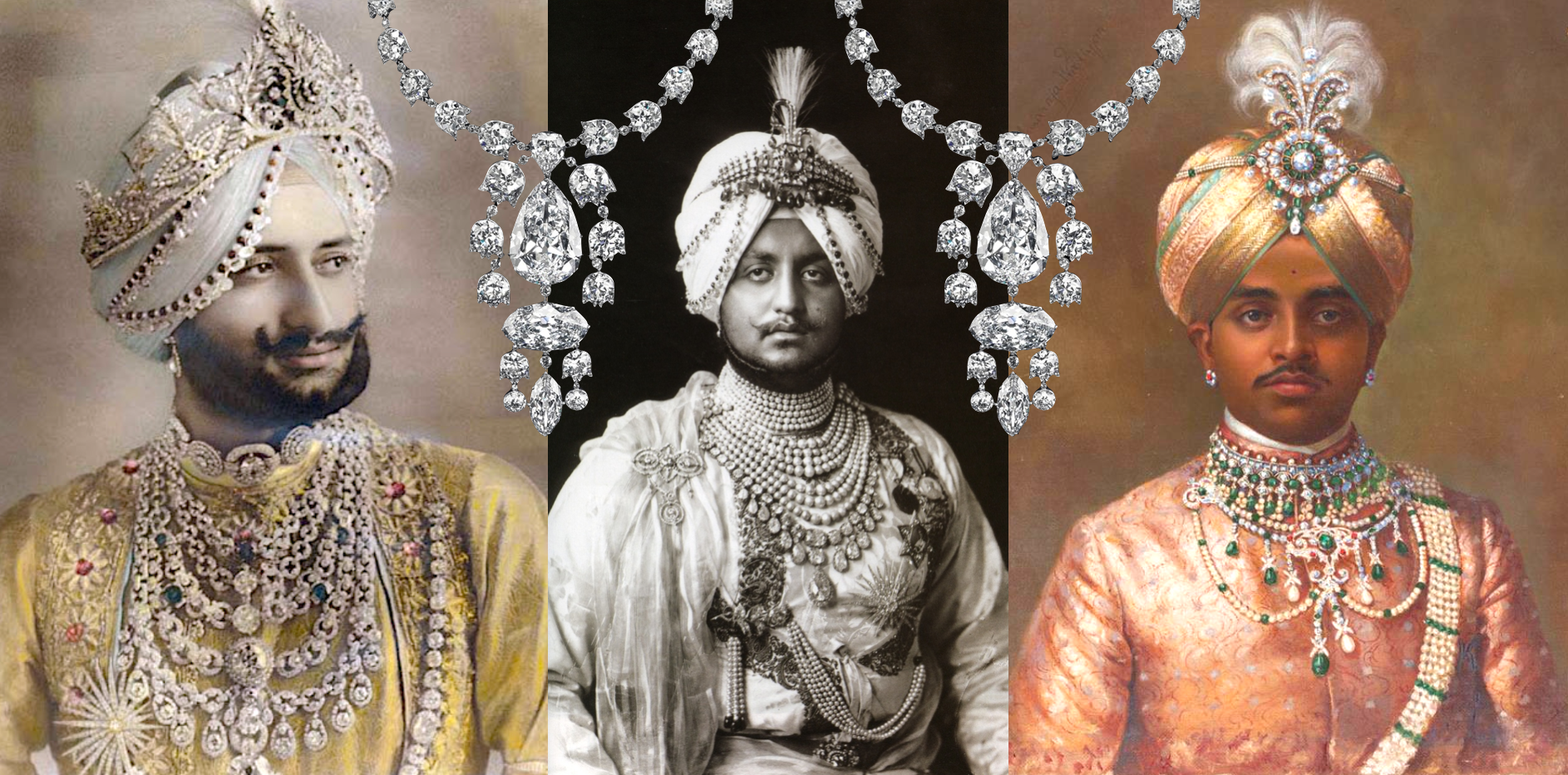
Maharajas! The word maharaja, literally ‘great king’, conjures up a vision of splendor and magnificence. These princely rulers of India played an important role within a social and historical context and were patrons of the arts, both in India and Europe. That resulted in magnificent objects symbolic of royal status, power and identity.
According to an account by Alain Boucheron on his family business in the book “The Master Jewelers” that was cited in the Times:
"The flamboyant Maharajah... arrived at Boucheron's in 1927 accompanied by a retinue of 40 servants all wearing pink turbans, his 20 favorite dancing girls and, most important of all, six caskets filled with 7571 diamonds, 1432 emeralds, sapphires, rubies and pearls of incomparable beauty.”
Here's a look at the opulent world of the maharajas and their extraordinarily rich culture thought their jewels.
I have tried my best to attribute images to their creators and original sources. Please contact me if you know the source of images that are not attributed.

Maharaja of Patiala, Yadavindra Singh. Patiala Necklace.

Maharaja of Patiala, Yadavindra Singh wearing the famous Patiala Necklace. 1930s.

The famous Patiala Necklace was made for the Maharaja of Patiala, Bhupinder Singh.
Patiala Necklace weighs almost a 1000 carats, Patiala necklace was made for the Maharaja in 1928 by Cartier. The bib-like Art Deco necklace featured five rows of diamond-encrusted platinum chains and Burmese Rubies. It included as its centerpiece the famous De Beers diamond, a cushion-cut pale yellow diamond weighing 234.69 carats.

Close up of the famous Patiala Necklace featuring the De Beers diamond, a cushion-cut pale yellow diamond weighing 234.69 carats.

Bhupinder Singh, Maharaja of Patiala (1891-1938), 1911. From the photo of Carl Vandyk © Costa / Bridgeman Images

The Patiala Ruby Necklace/ choker. Ruby beads, oval cabochon and circular-cut rubies, old and single-cut diamonds, natural pearls, platinum (French marks), 13 ins., 1931, restored and restrung by Cartier Tradition in 2012, signed Cartier.

Maharani of Patiala wearing The Patiala ruby choker and Cartier necklaces along with other Art Deco jewels in 1931. Photo © National Portrait Gallery, London
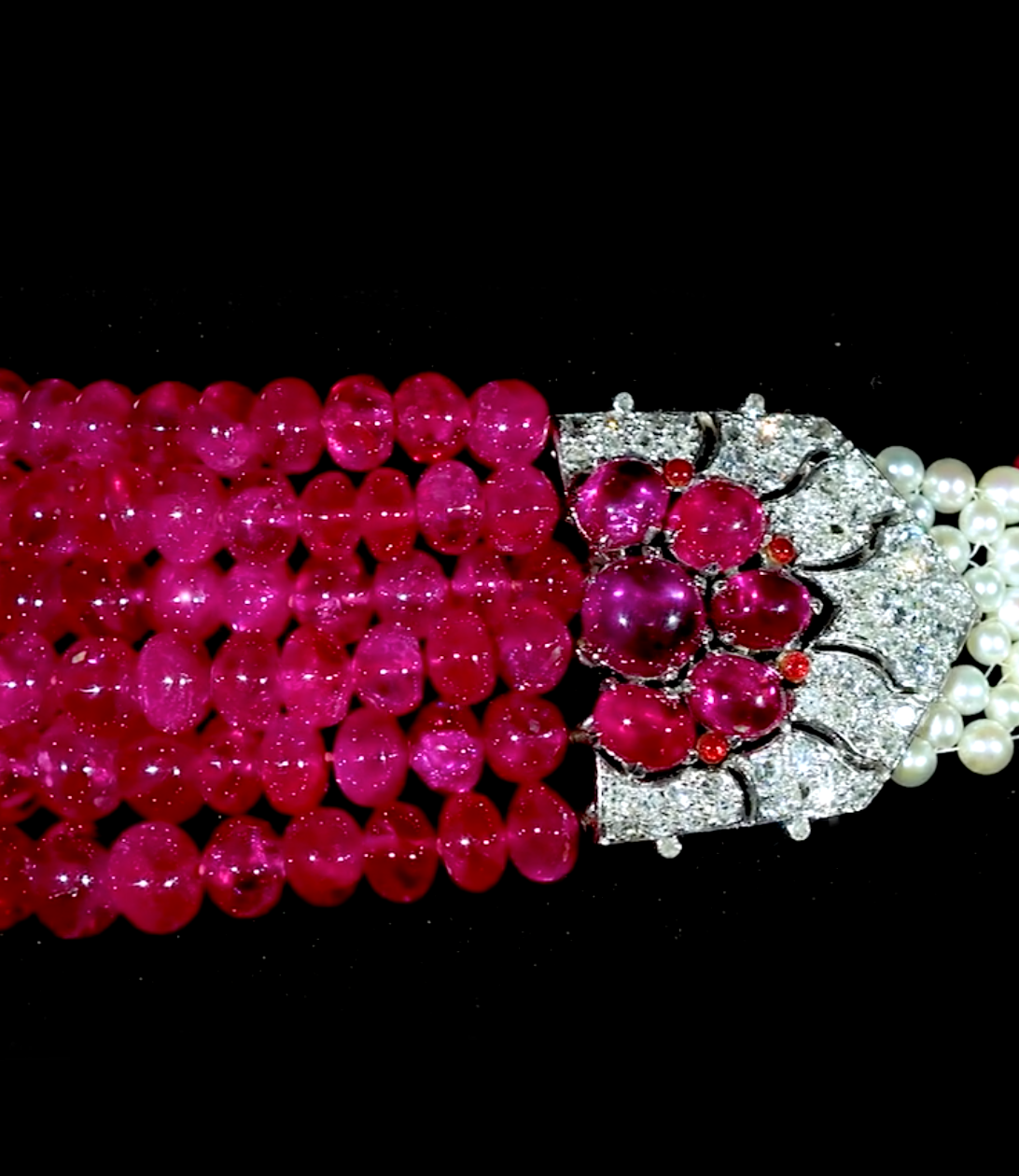
The Patiala ruby choker: an Art Deco ruby, diamond and natural pearl choker necklace, Cartier, 1931. Offered in Maharajas & Mughal Magnificence on 19 June 2019 at Christie’s, New York.
The Koh-i-Noor Diamond
It was only in the early 19th Century, when the Koh-i-Noor reached the Punjab, that the diamond began to achieve its preeminent fame and celebrity.
Enter, Maharaja Ranjit Singh, popularly known as Sher-e-Punjab or Lion of Punjab.
It was not just that Ranjit Singh liked diamonds, and respected the stone’s vast monetary value; the gem seems to have held a far greater symbolism for him. Since he had come to the throne he had won back from the Afghan Durrani dynasty almost all the Indian lands they had seized since the time of Ahmad Shah. Having conquered all the Durrani territories as far as the Khyber Pass, Ranjit Singh seems to have regarded his seizure of the Durrani’s dynastic diamond as his crowning achievement, the seal on his status as the successor to the fallen dynasty. It may have been this, as much as the beauty of the stone, that led him to wear it on his arm on all state occasions. [Source: William Dalrymple / OutlookIndia]

Painting of Sikh Maharaja Ranjit Singh. Indian school 19 century. Image credit: The Royal Collection Trust ( addition of Koh-i-Noor bajubandh by Reena Ahluwalia for this educational blog). Maharaja Ranjit Singh is seen wearing the Koh-i-Noor set in his armband as an armlet. “Of all the owners of the Koh-i-Noor,” Historians Anita Anand and William Dalrymple write, “none made more of the diamond than Ranjit Singh”, who turned it into a symbol of his rule.
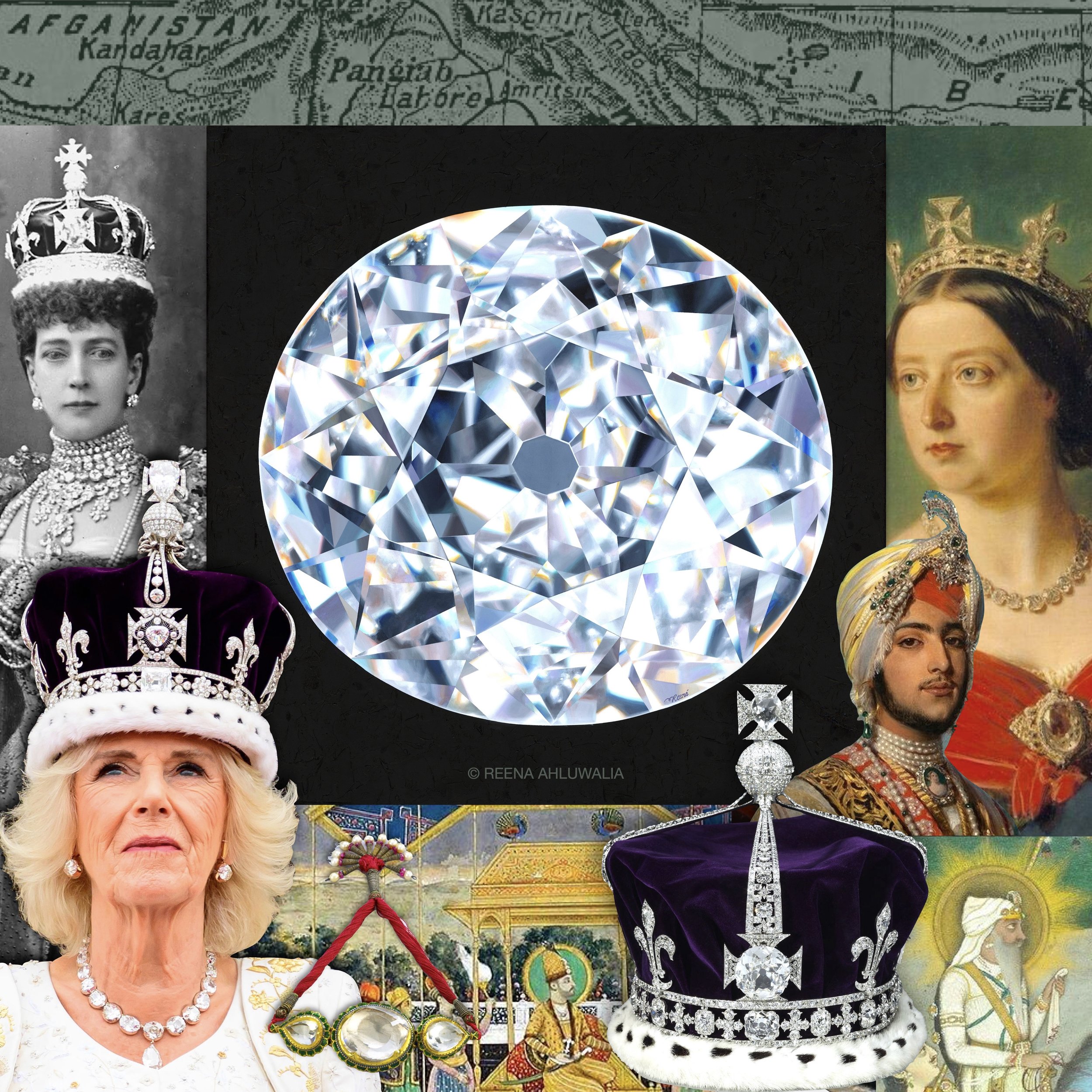
The world’s most famous, Koh-i-Noor is a diamond of monumental stature. Image: Compliled by Reena Ahluwalia, with Reena’s painting of the Koh-i-Noor diamond at it’s center. Shows Maharaja Ranjit Singh and Maharaja Duleep Singh of Punjab.

The magnificent and bejeweled Maharajas of the Royal Kingdom of Mysore. Image compiled by Reena Ahluwalia.

The diamond-clad, gem encrusted paintings of the Maharaja and Maharani of Royal Mysore. 60 x 40 inches, hand-painted on canvas by artist Reena Ahluwalia. C. Krishniah Chetty Crystal Museum. Bengaluru, India. Image: ©Reena Ahluwalia. The words Maharaja (great king) and Maharani (great queen) originates in Sanskrit (महाराज | महारानी). The paintings celebrate an unbroken jewelry heritage and the enduring significance these gems retain in the tapestry of Indian culture.

Jacques Cartier with Indian gemstone merchants, 1911, Cartier Archives. Since his first trip to India, in 1911, Jacques Cartier (1884-1942) had become familiar with the extravagant tastes of the maharajas. Fabulously rich and passionate about precious stones, the Indian princes stopped at nothing to satisfy their perpetual appetite for jewels. Image: Cartier Archives

Turban Ornament (jigha) of the Maharaja of Nawanagar. Belle Époque diamond jigha, 1907 and remodelled circa 1935. The turban ornament set with old baguette and pear-shaped diamonds, white gold, fitted with plume holder on the reverse, lower portion detachable and may be worn as a brooch. Image: Christie’s / The Al-Thani Collection

Drawing of the ceremonial necklace for the Maharajah of Nawanagar, 1931, London Cartier Archives. Jacques Cartier presented the Maharaja with a dazzling project. Sadly, the Maharaja of Nawanagar had little time to wear the “finest cascade of coloured diamonds in the World”. He died in 1933, two years after the necklace was delivered. Image: Cartier Archives
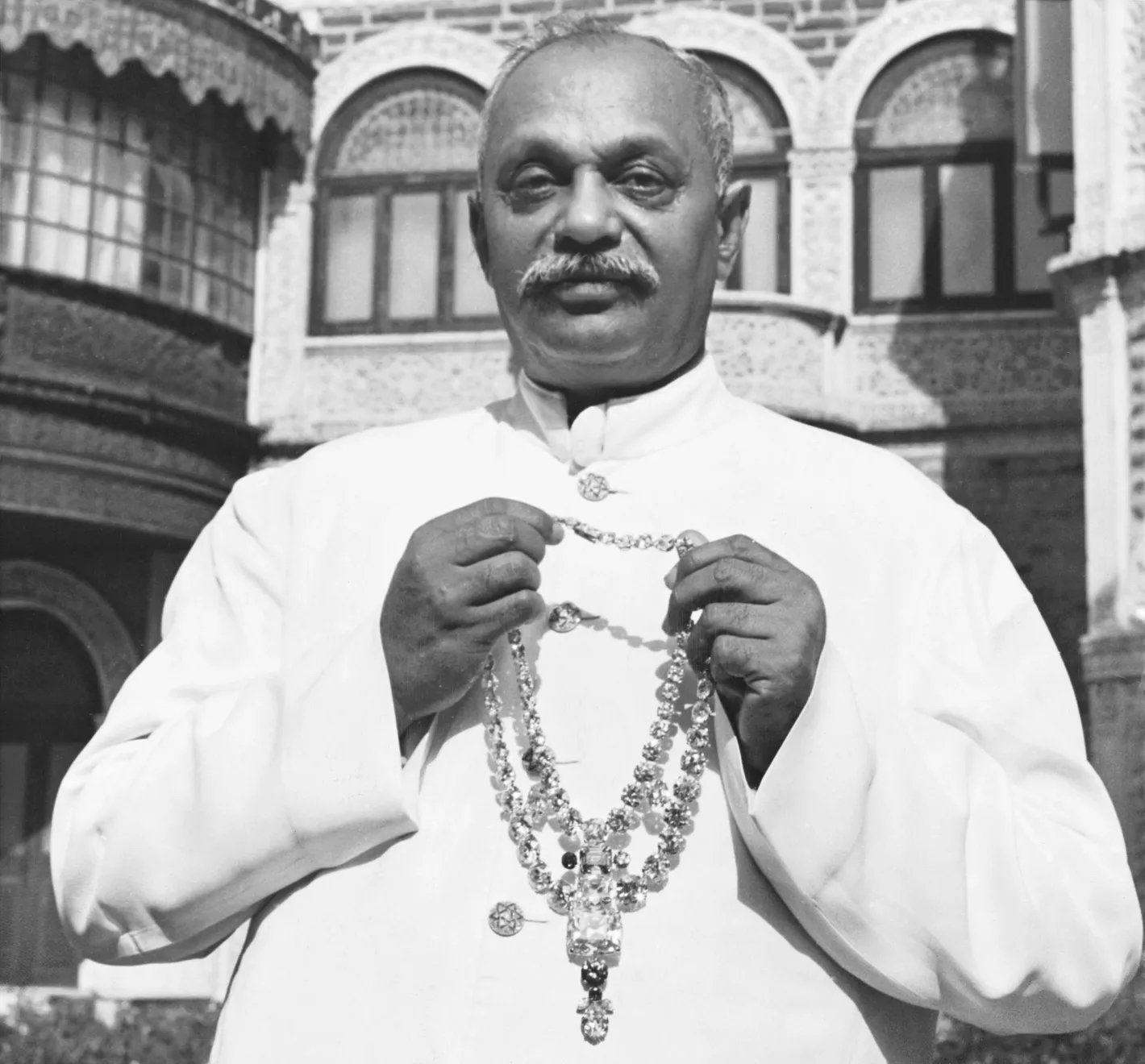
The Maharaja of Nawanagar. Image: Cartier.
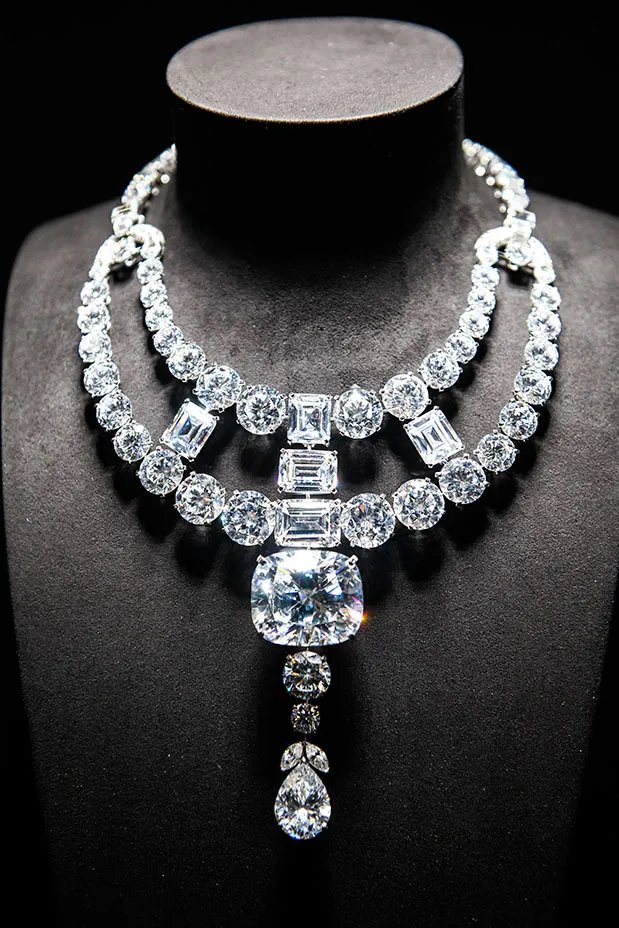
The replica of the famous Cartier necklace created for the Maharaja of Nawanagar. The design is inspired by a 1931 piece Jacques Cartier crafted for the Maharaja of Nawanagar; that necklace no longer exists, so Cartier artisans worked from sketches and photographs from its archives. Image: the Hollywood Reporter

Turban Ornament or Brooch of the Maharaja of Nawanagar. ca. 1920, modified ca. 1925–35. Platinum, set with sapphire and diamonds. Image: Metropolitan Museum of Art.

Maharajah of Nawanagar wearing the emerald and diamond necklace created by Cartier in 1926, Cartier Archives.
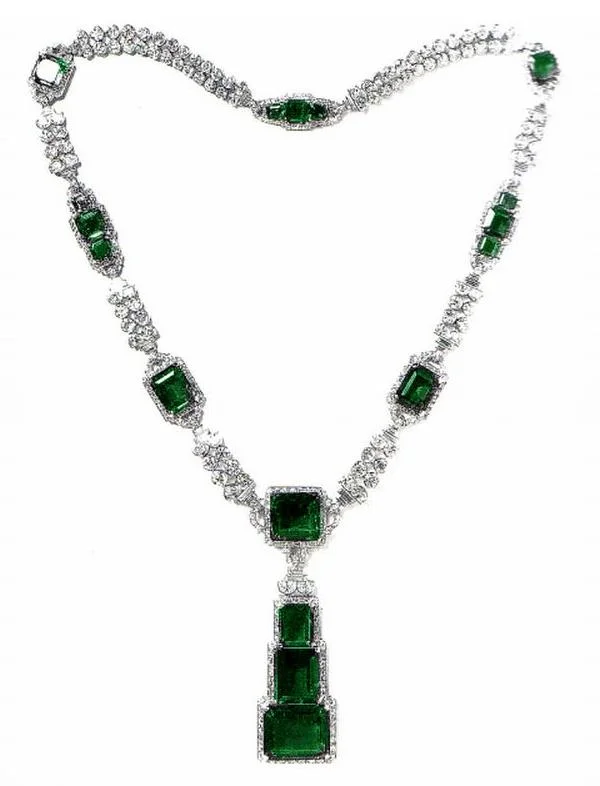
Emerald and diamond necklace, containing 17 rectangular emeralds, 277 carats. The emerald in the pendant weighed 70 carats and was reputed to have come from the collection of a former Sultan of Turkey. Jacques Cartier set it in a Art deco piece for the Maharaja of Nawanagar. Image: Cartier. Green coloration in image added by: https://royal-magazin.de/

The 61.05 carat Tiger Eye Diamond in the Tiger Eye Turban Ornament. Cartier London, 1937
Platinum, diamond . Although the Cartiers were never technically diamond merchants, the deals they made and the work they did with some of the finest stones in the world played a key role in developing the firm’s international stature. In 1937, Maharaja Digvijaysinhji of Nawanagar asked Cartier to set the ‘Tiger Eye’, an unusual cognac-coloured diamond discovered in 1913 and sold by the firm to his predecessor Maharaja Ranjisinhji. Cartier designed a turban ornament around the gem, using baguette-cut diamonds to create an Art Deco look for this traditional Indian jewellery form. Image courtesy: Al Thani Collection

This stunning Art Deco ruby and diamond necklace (1937) was created by Cartier, commissioned by Maharaja Digvijaysinhji of Nawanagar.
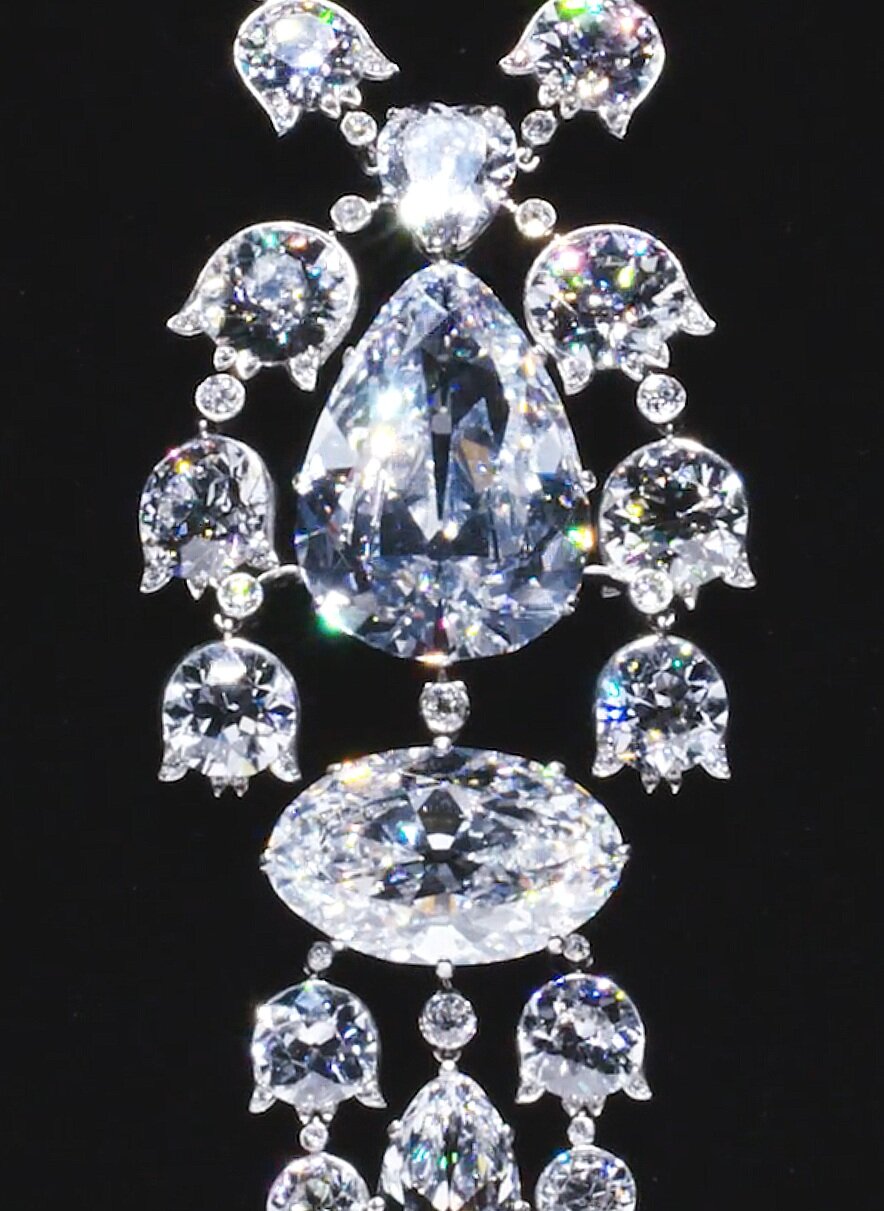
A Belle Époque diamond devant de corsage brooch, Cartier, 1912. Christie’s New York.

Devant-de-Corsage brooch, 1912, Cartier. Pear brilliant-cut diamond of 34.08 carats, oval brilliant-cut diamond of 23.55 carats, modified marquise brilliant-cut diamond of 6.51 carats, heart modified brilliant-cut diamond of 3.54 carats, lily-of-the-valley old-cut diamond links, platinum and 18k white gold. Image: Christie’s
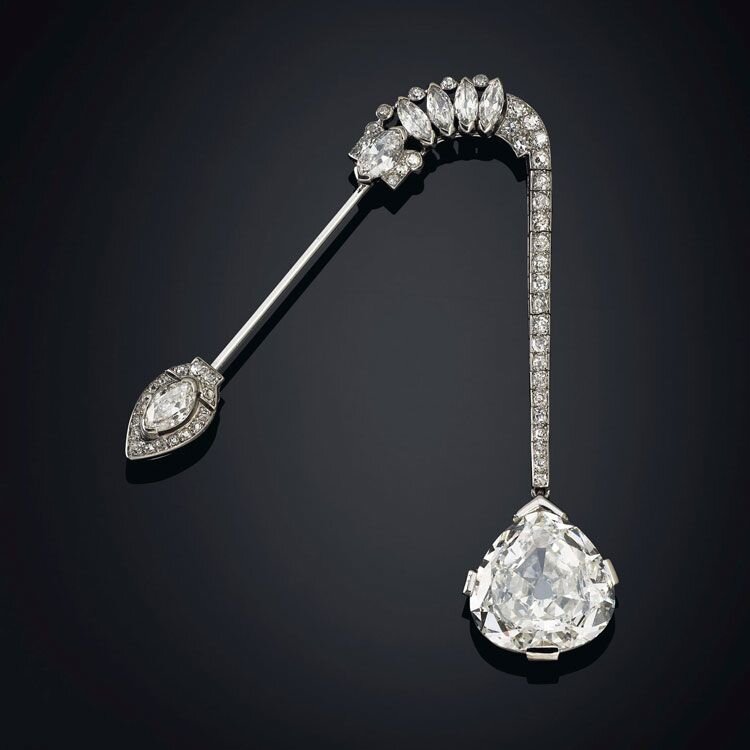
An Art Deco diamond Cliquet brooch, Cartier circa 1925. Offered in Maharajas & Mughal Magnificence on 19 June 2019 at Christie’s, New York. Credit: Christie’s
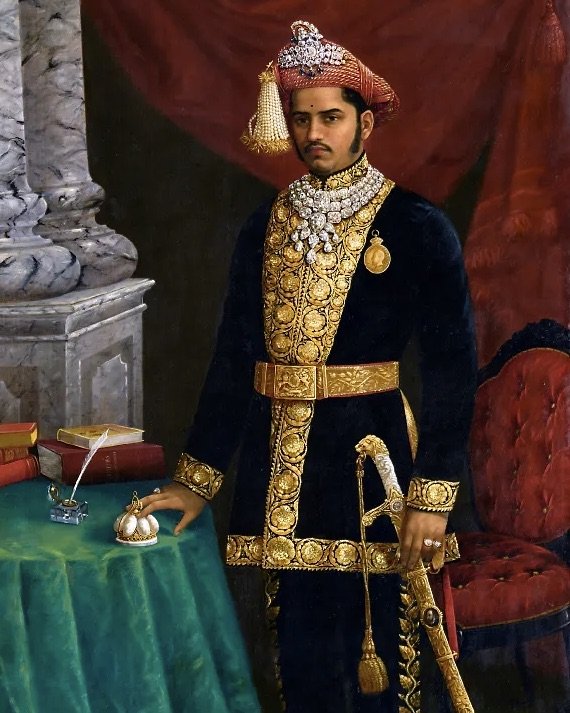
Maharaja of Baroda, Maharaja Sayajirao III painted by Raja Ravi Varma in 1881. Maharaja Fatesingh Museum. Image: The Royal Gaekwad Collection. The Maharaja is seen wearing the famous Baroda three-tier diamond necklace with Star of South and English Dresden diamonds.
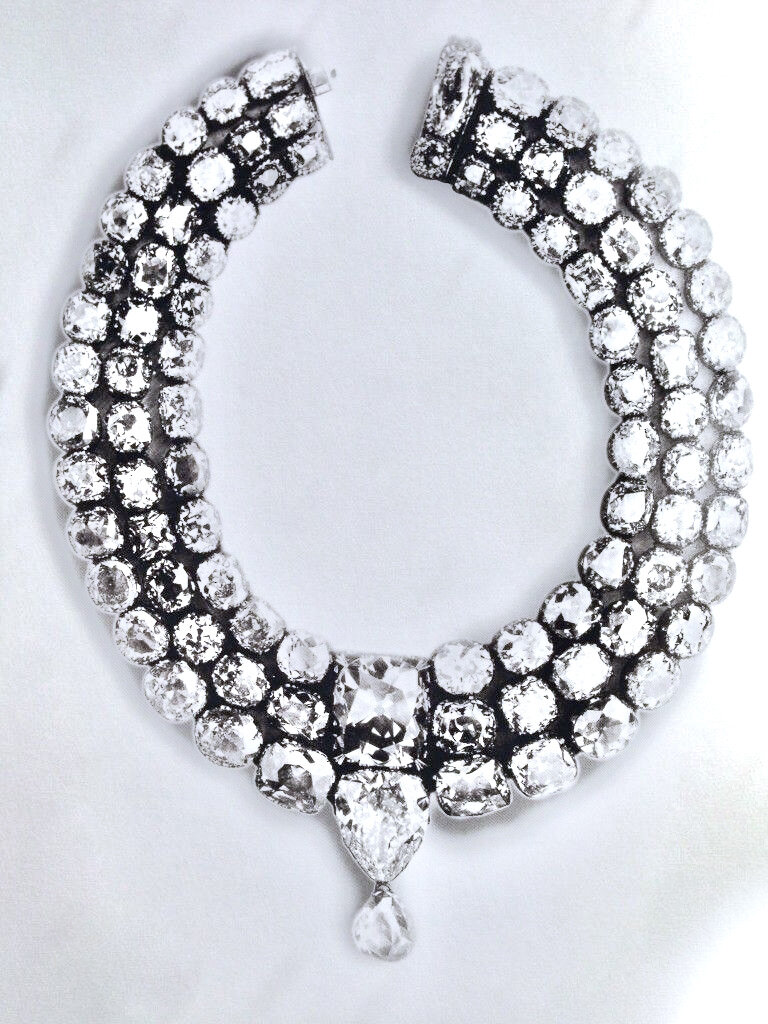
From The Treasury of Baroda - a magnificent three-tired diamond necklace, shown here worn by the Maharani of Baroda, Sita Devi in 1948. Khande Roe, Gaekwar of Baroda, had this necklace made to display two important diamonds - The 128.48-carat Star of the South (fancy light pinkish-brown) and the 78.5-carat English Dresden below it. Image taken in 1880.

Maharani Sita Devi of Baroda wearing a magnificent three-tired diamond necklace, image taken in 1948. Khande Roe, Gaekwar of Baroda, had this necklace made to display two important diamonds - The 128.48-carat Star of the South (fancy light pinkish-brown) and the 78.5-carat English Dresden below it.

The famous three-tiered diamond necklace featuring the 128.48-carat Star of the South (fancy light pinkish-brown) and the 78.5-carat English Dresden below it. Image: Alamy

The Gaekwar of Baroda. Diamond necklace made to display both the 128.48-carat "Star of the South" and the 78.5-carat "English Dresden" below it.

Maharaja of Baroda, Sayaji Rao III. 1889. Image: National Portrait Gallery. Wearing his famous seven row diamond necklace and other diamond ornaments. In the late 19th and early 20th centuries, virtually every Indian Maharaja commissioned state photographs of themselves wearing their most important jewelry as a symbol of their power and position.

The famous Baroda Diamond Necklace. This magnificent ceremonial necklace with diamonds and emeralds was worn by the Maharaja (King) of Baroda, India in the 1860s. It was said to have been broken up in the 1940s to provide stones for anklets for the new Maharani (Queen) of Baroda, Sita Devi. Image compilation by: https://royal-magazin.de/
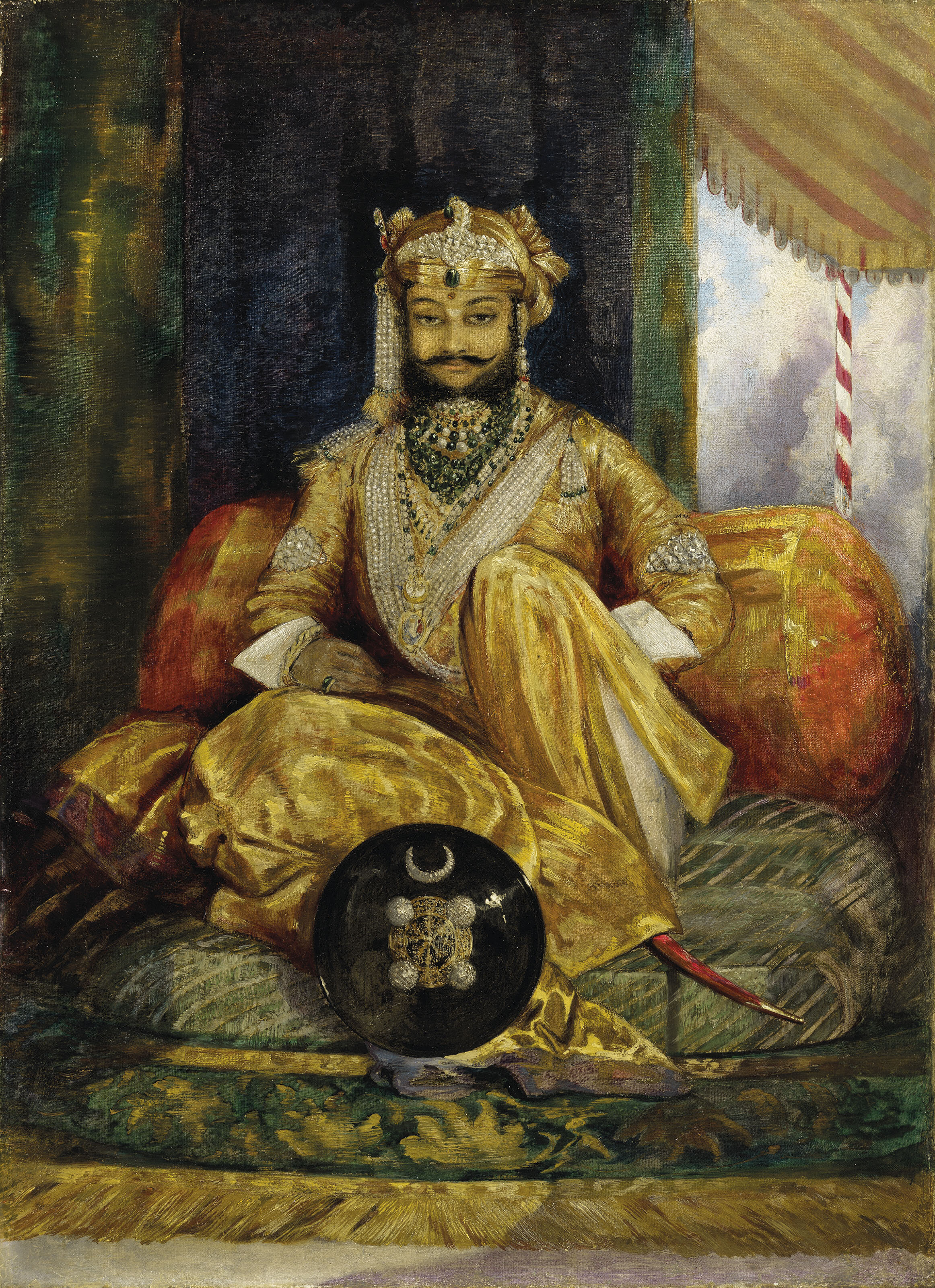
George Landseer (1834-1878). Portrait of H. H. the Maharaja Tukoji Rao II Holkar of Indore, seated small full-length on a cushion. Credit: Christie’s

The superb clarity and color of emerald ranks it among the world's finest Colombian emeralds. It was once the centerpiece of an emerald and diamond necklace belonging to the Maharani of the former state of Baroda , India. It originally weighed 38.4 carats, but was recut and set in a ring designed by Harry Winston, where it is surrounded by 60 pear-shaped diamonds totaling 15 carats. Photo: Smithsonian

Van Cleef & Arpels, Paris, 1949–50. The "Baroda Set" ordered by the Maharani of Baroda, “The Indian Wallis Simpson”, wife of the Maharaja of Baroda. This impressive suite of jewellery was designed by Jacques Arpels for Sita Devi, the second wife of Maharaja Pratapsinh Gaekwad of Baroda. It consists of 13 pear-shaped Colombian emeralds – 154 carats in total – suspended from diamonds set in the shape of a lotus flower. All the gems were all supplied by the Maharani and belonged to the Baroda Crown Jewels.

The Maharani of Baroda at a party given at Vagenende Restaurant in Paris in June 1966, wearing a grey pearl and diamond bracelet by Cartier. Photo © AGIP / Bridgeman Images Via Christie’s.

Portrait of Maharaja Madho Singh. Attributed to Sahib Ram. Maharaja Madho Singh (r.1750-1768) of the Kachwaha Dynasty of Jaipur. Multiple necklaces of white pearls and emeralds flow over his sheer semi-transparent mauve and gold jama. His finely trimmed upturned mustachio forming an abstract curving interplay with his stippled ax-blade sideburn and shadowlike hint of a beard. A mauve and gold pagri (turban) with highly ornamented aigrette contains strands of large emeralds and gold. Depicted bust length with his right arm flexed over a white and gold embroidered coverlet over a window ledge. Credit: Sotheby’s

Portrait of Maharaja Madho Singh of Jaipur (1750-1768) by Ram ji, Jaipur, north India, circa 1760-70. Credit: Christie’s

The meeting of Maharaja Mudhoji Bhosle sen sahib, Rajah of Nagpur and Maharaja Ishwari Sen Bahadur, Rajah of Mandi school of Ghulam 'Ali, Delhi, early 19th century. Credit: Christie’s

One of the highlights for me at 'Diamonds: A Jubilee Celebration' exhibition was this incredible 2000-carat, King Edward VII's diamond encrusted sword. Set with more than 700 white and yellow diamonds, the sword was presented to King Edward VII by the Maharajah of Jaipur, Sawai Sir Madho Singh Bahadur, to mark the king's coronation in 1902. Made from steel and gold, enamelled in blue, green and red, the diamonds are set in a design of lotus flowers and leaves. Photo:© PA
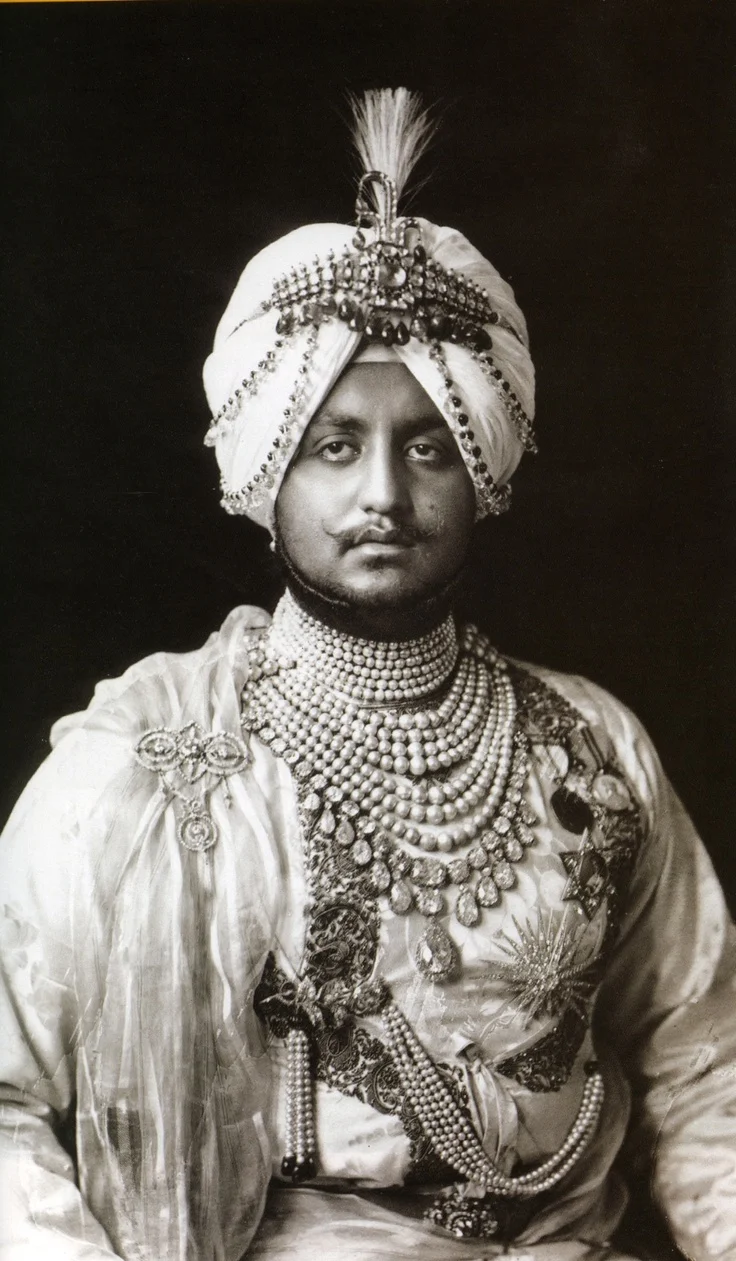
Maharaja Bhupendra Singh of Patiala. Image: © National Portrait Gallery, London

THE HILT OF THE STATE SWORD OF MAHARAJA JAGATJIT SINGH OF KAPURTHALA (1872-1949) NORTH INDIA, CIRCA 1900. Enamelled and set with diamonds, the lion-headed pommel set with ruby eyes, one side of the hilt set with a raised and molded crest of Kapurthala and the other side with the words ‘Kapurthala State’ set in diamonds. Credit: Christie’s

An enamel and gold hunting case pocket watch. Champlevé enamel portrait depicting Maharaja Bhupinder Singh of Patiala, enamel coat of arms on the reverse, white enamel dial, 18k gold, circa 1930. Image: Christie’s

Maharaja Bhupendra Singh of Patiala. 1911. Wears an aigrette or Sarpech by Cartier and various other turban ornaments. While the front of aigrette is set with diamonds, rubies and emeralds, the back shows the intricacy of craftsmanship with foliate motifs of red, green and blue enamel. He also wears a necklace of fourteen strands of natural pearls.

A single-strand natural pearl and diamond necklace, Cartier. Graduated strand of 37 natural pearls of 14.00 to 7.05 mm, old-cut marquise-shaped diamond, platinum (French marks). Image: Christie’s

An Art Deco emerald, sapphire and diamond belt buckle-brooch, Cartier. Octagonal step-cut emerald of 38.71 carats, buff-top calibré-cut sapphires and emeralds, old and single-cut diamonds, platinum and 18k white gold. Many of Cartier’s finest jewels from this period were inspired by Indian architecture, gems and jewels. The calibré-cut sapphire trim and diamond detail are reminiscent of ornate archways present in Mughal palaces and royal quarters. Image: Christie’s

Bejeweled Maharaja of Mysore, Krishnaraja Wadiyar IV. Portrait by K. Keshavayya (1906). © V&A Images/Victoria and Albert Museum, London.
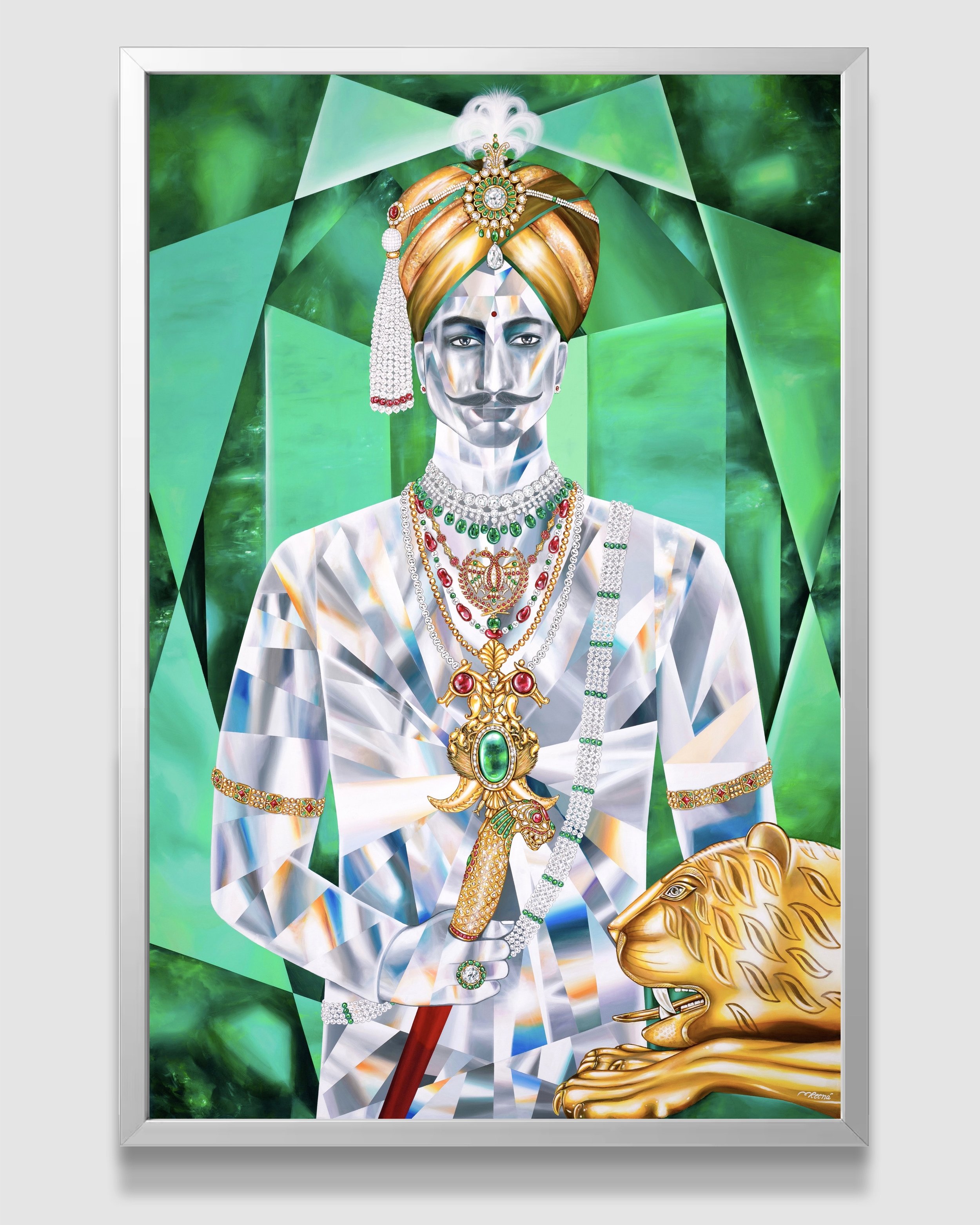
The Maharaja of Mysore. 60 x 40 inches, hand-painted on canvas by artist Reena Ahluwalia. C. Krishniah Chetty Crystal Museum. Bengaluru, India. Image: ©Reena Ahluwalia. The word Maharaja (Sanskrit: महाराज) means great king or ruler. The painting show a diamond-clad body of Maharaja, bejeweled with historically accurate gems and jewels. Meticulously crafted, every inch of the canvas narrates a tale embedded with diamonds, gemstones, and gold.

Krishnaraja Wadiyar III, Maharaja of Mysore. 1866. Credit:

Maharaja Chamarajendra Wadiyar X of Mysore. He was the twenty-third maharaja of the Kingdom of Mysore, between 1868 and 1894. Image: Wikipedia Commons.

Procession of Krishnaraja Wodeyar III through Mysore, 1825–1830. The bejewelled Maharaja is on an elephant leading a religious procession in honour of the god Shiva. He preceded by dancing-girls, musicians, chauri-bearers and men carrying illuminations and letting of fireworks. British military commanders are also shown. Credit: V&A.

An emerald, ruby and diamond set gold state pen case and inkwell. (Davat-i Dawlat). Deccan, Central India, Late 16th century. A sacred bird (hamsa) engraved under the inkwell. Image: Christie’s.
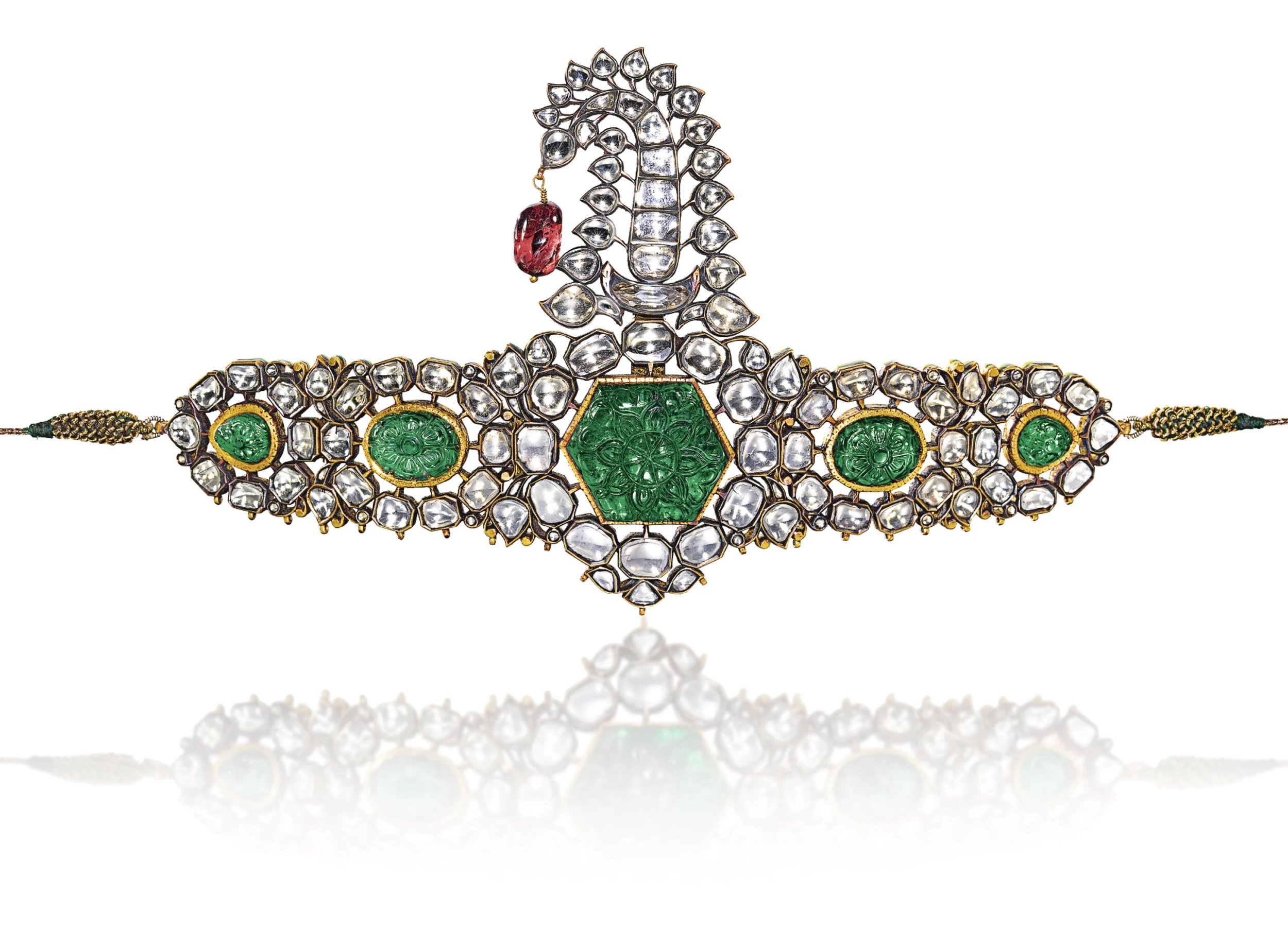
Deccan. 19th century. A gem-set Jigha. The openwork hinged body set with foiled diamonds and a large central octagonal carved emerald between four smaller carved emeralds, topped with a curling jigha and hanging spinel, the reverse with polychrome enamelled floral details and birds, compartment for jigha, suspension cords. Christie’s.

An Indian enamelled and gem-set pendant, Deccan, 17th-18th century, with later pearl chain. Image: Sotheby’s. Rendered in the form of a bird with outstretched wings and tail feathers, the breast mounted with a diamond medallion, gold body and neck set with cabochon rubies and emeralds, the ruby beak, wings and tail feathers with attached drop-pendant pearls, the reverse of the wings and tail decorated with dark blue, green, yellow, red and white enamelling, loops attaching later gold and pearl suspension chains.
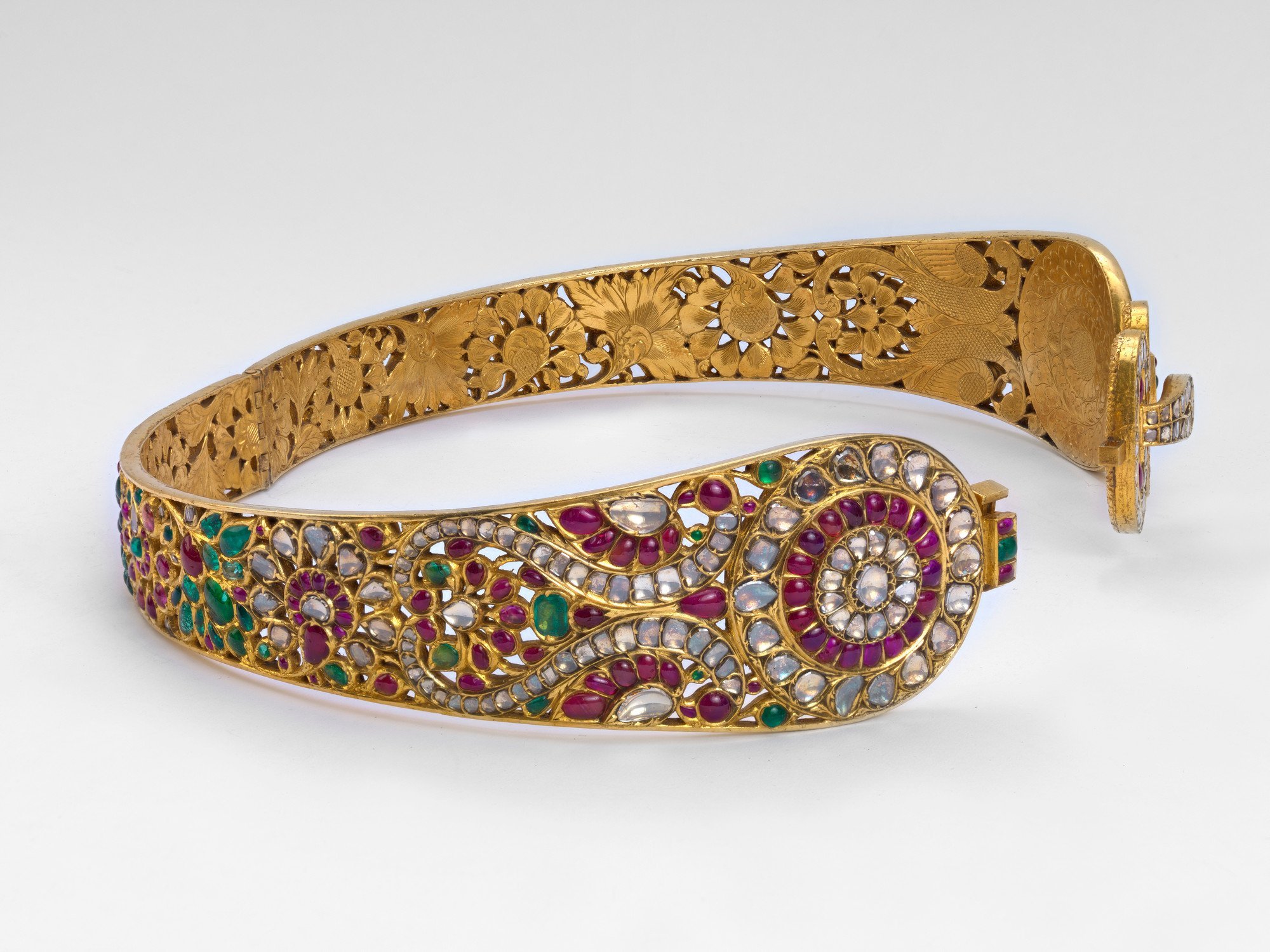
Waist belt mid-nineteenth century or earlier. Gold, diamonds, emeralds and rubies. Presented for Queen Alexandra, when Princess of Wales by Chamarajendra Wadiyar X, Maharaja of Mysore in 1875, during the Prince of Wales's tour of India in 1875-76. A hinged waist belt made of a gold framework inlaid with diamonds, rubies and emeralds. The inner rim of the belt is engraved with patterns of lotuses and peacocks. The front of the belt imitates a buckle, where a small hook that actually holds the two halves of the belt together is concealed. Belts of this type would be worn by women in India, in particular South India. Image: Royal Collection Trust.

The Maharani of Mysore. 60 x 40 inches, hand-painted on canvas by artist Reena Ahluwalia. C. Krishniah Chetty Crystal Museum. Bengaluru, India. Image: ©Reena Ahluwalia. The word Maharani (Sanskrit: महारानी) means great queen or ruler. The painting show a diamond-clad body of Maharani, bejeweled with historically accurate gems and jewels. Meticulously crafted, every inch of the canvas narrates a tale embedded with diamonds, gemstones, and gold.

Three bejewelled royal women from the Court of Mysore in Southern India was painted by Thomas Hickey in circa. 1805. Shown in white sari on right is Rami Lakshmi Ammani, queen of the Wadiyar ruler of Mysore and adoptive grandmother of Krishnaraja Wadiyar III. Credit: Sotheby’s

Detail of repousse gold hair braid ornament, Jadai Nagam. Tamil Nadu. 19th Century. Image: Bonhams.

Dancing Shiva Pendant. Tamil Nadu. 20th century. Image: GIA

Portrait of Rani Mudai, wife of the last Raja of Coorg, Vira Rajendra Wodeyar (1808-62, deposed 1834), with whom the Lingayar dynasty ended. She is dressed in a dark blue choli and a dark red and gold sari. She wears elaborate jewellery and has her hands folder across her waist. Credit: V&A

THE 'INDORE SAPPHIRE' TAVEEZ BEAD PENDANT NECKLACE, MOUNTED BY CARTIER. Oval-shaped sapphire taveez bead of 23.20 carats, 18th century, later added 18k white gold fine link chain. Owned by Maharaja Yeshwant Rao Holkar II of Indore. Image: Christie’s
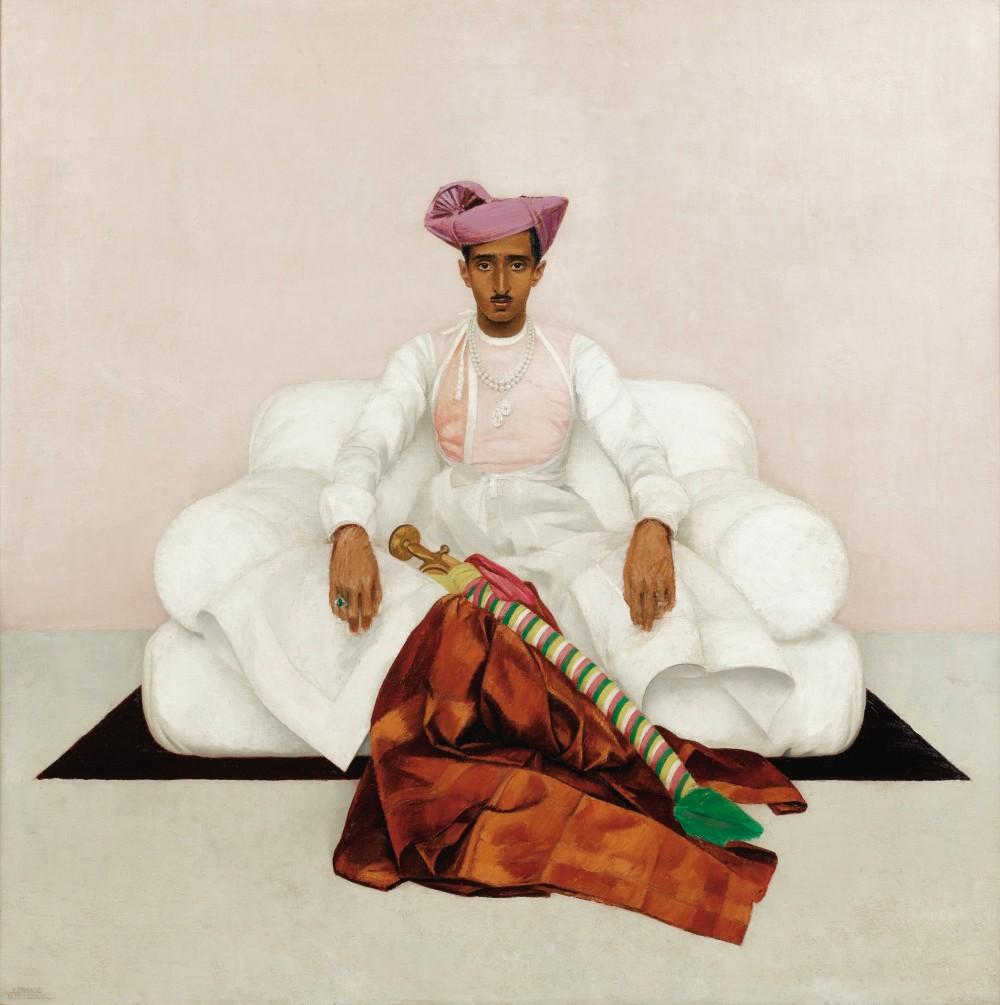
Bernard Boutet de Monvel, The Maharadjah (Maharaja) of Indore, Oil on canvas, 1933. 85 x 85 cm, Estimate : 300.000 – 500.000 € and sold in 2016 for €2,499,000. Image: Sotheby’s. Boutet de Monvel’s depiction of the Oxford-educated Maharajah of Indore, whose likeness was destined for the walls of Manik Bagh, his Indian palace. In this six-foot, stunningly ethereal composition from 1933, the young man, dressed in traditional costume, sits on a white throne against a pale background, the whole brought to vivid life by shots of shimmering colour: a garnet-hued turban on his head, two magnificent 47-carat diamonds (the Pears of Indore) around his neck, along with a luxurious fabric and a striped sabre scabbard at his feet.
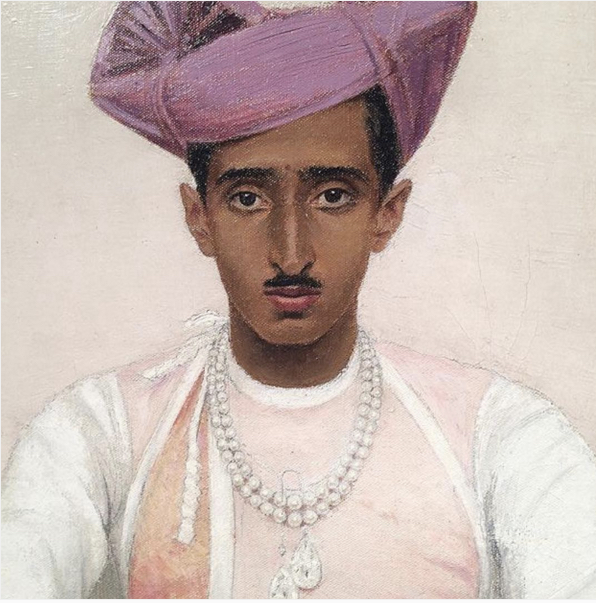
Bernard Boutet de Monvel, The Maharadjah (Maharaja) of Indore, Oil on canvas, 1933. 85 x 85 cm, Estimate : 300.000 – 500.000 € and sold in 2016 for €2,499,000. Image: Sotheby’s. Maharaja is wearing two magnificent 47-carat diamonds (the Pears of Indore) around his neck.

Maharaja Sawai Jai Singh Bahadur of Alwar, born 1882. Besides his traditional Indian ornaments, he wears the star insignia of the Indian orders granted to him by the British (Raj), then considered a part of the royal regalia.

Maharaja Sayaiji-Roa, Gaekwar, Baroda. 1889. Wearing his famous seven row diamond necklace and other diamond ornaments. In the late 19th and early 20th centuries, virtually every Indian Maharaja commissioned state photographs of themselves wearing their most important jewelry as a symbol of their power and position. Image: National Portrait Gallery.

A cross cultural exchange. Miniature painting. National Gallery of Modern Art, New Delhi, India. 1902. Interpreted by an Indian artist (unknown), King Edward VII and Queen Alexandra, depicted as the King-Emperor and Queen-Empress of India.
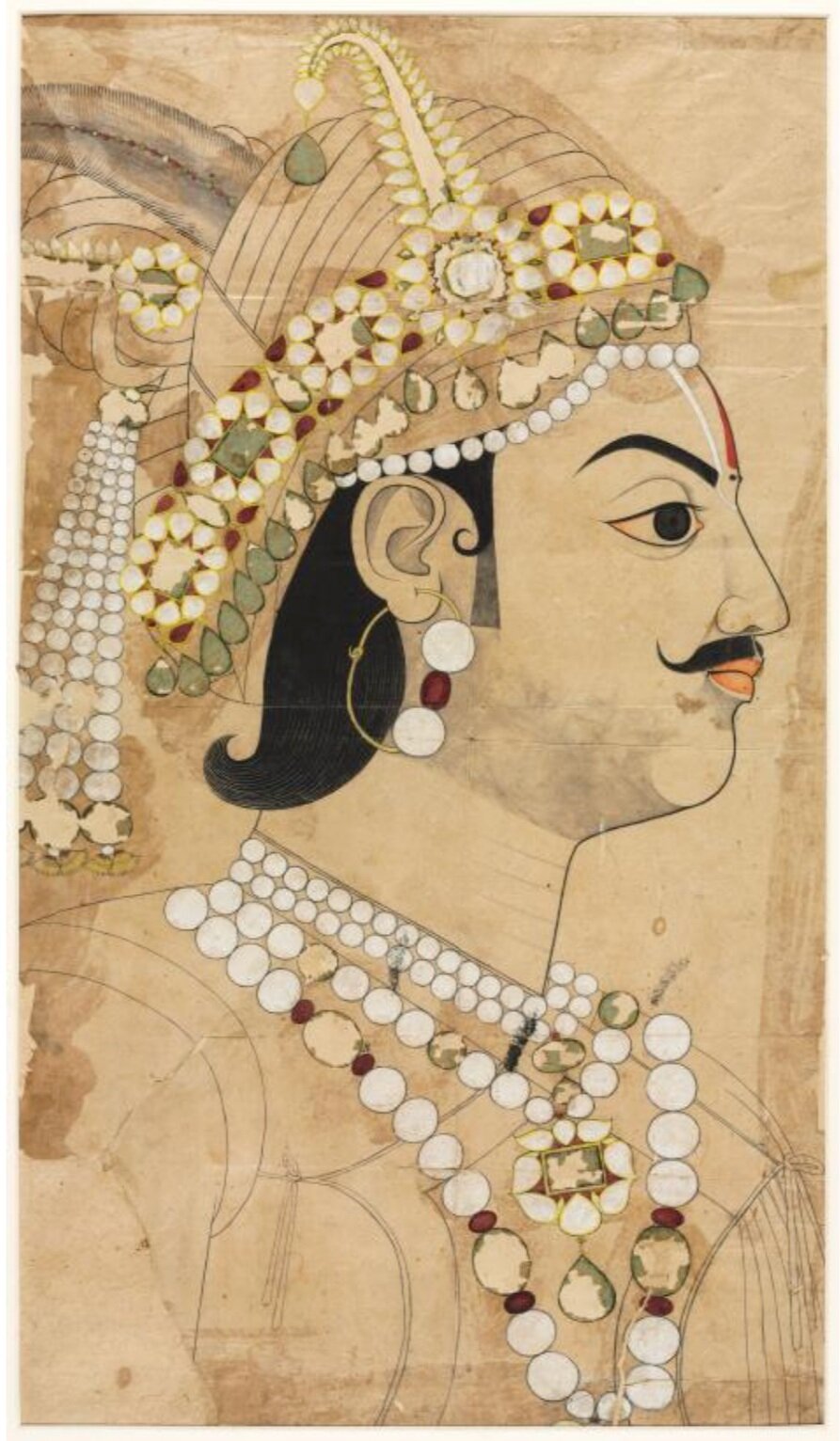
Bejeweled Portrait of Maharaja Pratap Singh (1764–1803). Maharaja Pratap Singh came to the throne in the princely state of Jaipur in 1778 at the age of 14, about 15 years before this portrait was painted. He was a poet and patron of the arts known for commissioning the famous “Palace of the Winds” in Jaipur. At his court he maintained an atelier of about 50 painters, among whom was a Muslim master, Sahib Ram, to whom this painting is attributed. Credit: Cleveland Art

Raja Sawant Singh and Bani Thani (as Krishna and Radha). 1780. Image: Philadelphia Museum of Art.
Kishengarh miniature painting, characterized by exaggerated profiles. Both with traditional Mughal-Rajput-style ornaments consisting of pearls, emeralds and rubies. They wear elaborate robes and precious jewels. Their intricate ornamentation—from the flower on Radha’s forehead to the anklet visible beneath Krishna’s robe—elevates them to royal status, hints at their amorous relationship, and emphasizes their divine identities.
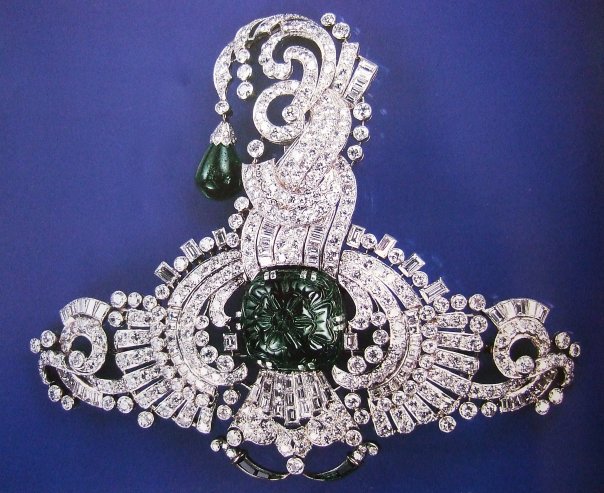
Diamonds and emeralds set in platinum. Aigrette (also known as Sarpech - Turban ornament). Private collection. 1930

The state durbar decorated elephant, with attendants of the Maharaja of Mysore. Royal India.

The Maharajah of Kolhapur.

End of 19th century rendering by Chaumet staff designer, of a proposed ensemble of ornaments for the uniform of a Maharaja. Rendering shows the use of diamonds, emeralds and pearls. Courtesy Chaumet.

1925. Rendering by Charles Jacqueau of Cartier for a headdress ornament for a turban, a project suggested by Maharaja of Kapurthala. Courtesy Cartier.

Jade case, 1700-1800. Jade, rubies, emeralds, diamonds, steel. © V&A Images/Victoria and Albert Museum, London.
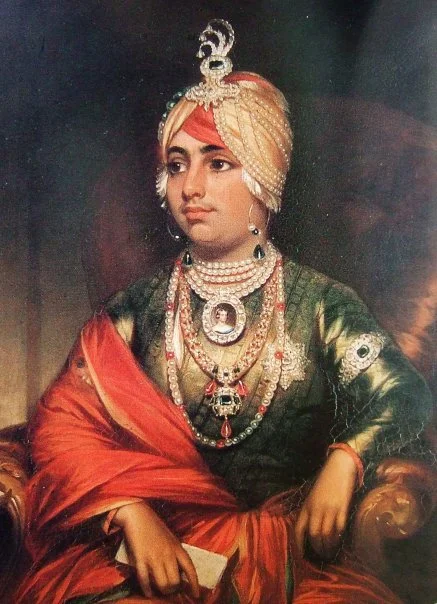
Maharaja Dilip Singh of Lahore. 1852. Portrait by George Beechy. Shown here at age fifteen. Amongst many other jewels, he is wearing a diamond Sarpech (Indian turban ornament) or aigrette with three plumes and a centrally placed emerald.
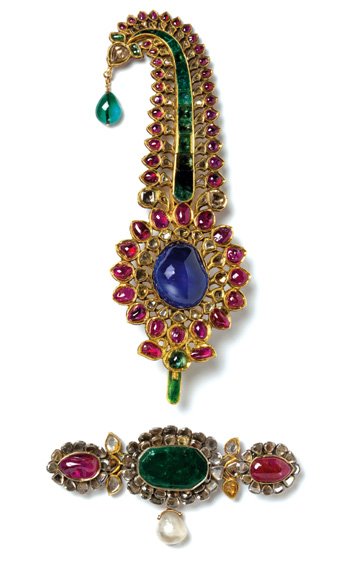
Turban ornament- gold, diamonds, rubies, emeralds, sapphire, pearl. Image: V&A

The Maharaja of Darbhanga. Royal India.

The Maharaja of Alwar. (1882-1937). Royal India.
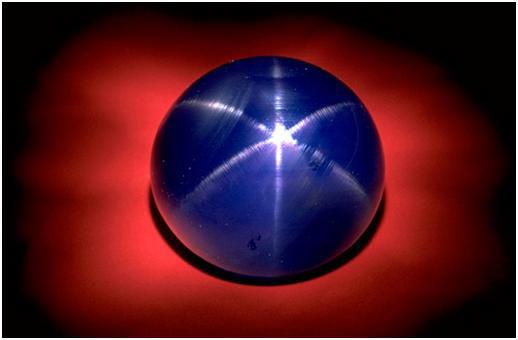
Renowned for its impressive size, intense color and sharp star, the Star of Asia, which weighs 330 carats, is one of the world’s finest star sapphires. It originated from Burma and is said to have belonged to India’s Maharajah of Jodhpur. Photo by Chip Clark

The Maharaja of Jammu & Kashmir. Royal India.

The Maharana of Udaipur. Royal India.

Emerald necklace & pendant that belonged to Maharani Prem Kumari, wife of the Maharaja of Kapurthala. 1910

Sprays of flowers turban jewel. Once belonged to the Maharaja of Jaipur. The aigrette is set with rubies, emeralds and pale beryls on one side, and the same stones with the addition of diamonds on the other. The stem and the sides of the jewel are enamelled in translucent green.

Prince, The Gaekwar of Baroda. Princely India.
Diamond necklace made to display both the 128.48-carat "Star of the South" and the 78.5-carat "English Dresden" below it. Royal India.

Portrait of Raja Jagat Singh of Nurpur (reigned 1618-46) probably 1619 attributed to Bichitr. Credit: Cleveland Art
In the past I have authored posts on, Bejeweled Maharaja & Maharani of Mysore, Koh-i-Noor Diamond, Diamonds on World Postage Stamps, Top Ten - Largest Diamonds Discovered In The World, Splendors of Mughal India, The Magnificent Maharajas Of India, Mystery & History Of Marquise Diamond Cut, Ór - Ireland's Gold, The Legendary Cullinan Diamond, Bejeweled Persia - Historic Jewelry From The Qajar Dynasty, Famous Heart-Shaped Diamonds, Type II Diamonds, Green Diamonds, Red Diamonds and more. Over years, I have spent countless hours in self-driven studies on diamond, jewelry history and research. I wrote these blogs for a simple reason - to share my collected knowledge with all who are interested, so that more can benefit from it. Take a look and enjoy! -- Reena
Quisque iaculis facilisis lacinia. Mauris euismod pellentesque tellus sit amet mollis.